
Coat Care Tips for Dogs with Sensitive Skin
Sensitive skin can make everyday grooming feel like a balancing act. The right brushing routine, gentle bathing, careful drying and sensible parasite control can help protect your dog’s comfort without over-handling already irritated skin. This practical guide explains what you can safely do at home, when to ask your vet for help and how calm, one-to-one grooming can support a healthier, happier coat.
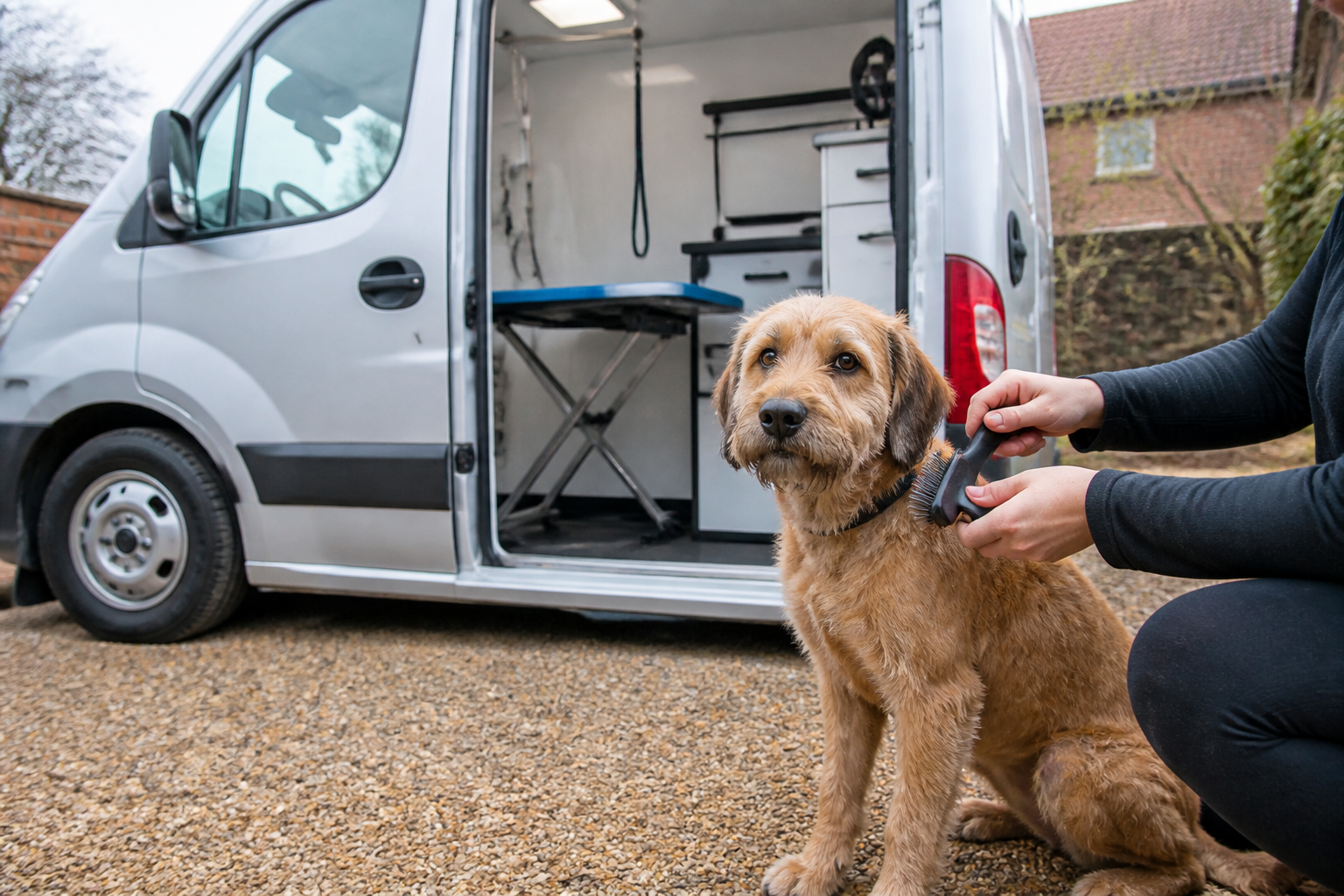
When your dog has sensitive skin, grooming is about much more than making the coat look tidy. A suitable routine can help remove loose hair, dirt, pollen and grass seeds before they stay against the skin, while preventing knots that pull and trap moisture. However, too much brushing, frequent bathing or unsuitable products can make irritation worse.
The most important rule is to treat ongoing itchiness, redness, soreness or hair loss as a health concern rather than simply a grooming problem. Sensitive skin can have many causes, including fleas, environmental allergies, food allergies, parasites, infection or a reaction to a product. A groomer can help you care for the coat gently, but cannot diagnose the reason for a skin flare-up. If your dog is uncomfortable, speak to your vet.
With that in mind, the following tips can help you create a kinder, lower-stress coat-care routine at home and prepare for a calm grooming appointment with Howling Dogs Grooming in Storrington and the surrounding West Sussex area.
What sensitive skin may look like
Some dogs naturally have finer coats, less protective undercoat or skin that reacts easily to changes in weather and products. Others develop sensitivity because of an underlying condition. Watch for changes rather than relying only on how the coat looks.
Possible signs include:
- Scratching, rubbing, licking or chewing more often than usual.
- Redness, small spots, scabs, dandruff or flaky areas.
- Patchy fur loss or coat that is becoming thinner.
- Saliva staining on the feet or legs from repeated licking.
- A greasy coat, unusual smell or skin that feels thicker or darker.
- Repeated ear problems alongside skin irritation.
- Sore areas, weeping skin or a sudden change after using a new product.
These signs do not identify one particular cause. For example, fleas may be difficult to spot, and a dog with an allergy can become more uncomfortable if parasites are also present. Keep a note of when the problem started, where it appears, what your dog has been walking through and whether anything has recently changed at home.
Start with a gentle brushing routine
Regular, careful brushing is often more helpful than an occasional long grooming session. It removes loose hair and outdoor debris, gives you a chance to check the skin and reduces the risk of mats. A tangled coat can pull at the skin and hold dampness close to the body, especially around the ears, armpits, groin, collar area and between the toes.
How to brush a sensitive-skinned dog
- Choose a calm time. Work when your dog is relaxed, not immediately after an exciting walk or when they are tired and irritable.
- Use the right tool. A soft bristle brush, suitable comb, grooming mitt or gentle slicker may be appropriate depending on the coat. If you are unsure, ask a professional groomer to show you how to use it safely.
- Begin with easy areas. Start at the shoulder or chest, where your dog may be more comfortable, and reward calm behaviour.
- Part the coat in small sections. Brush in short, light strokes so you can see the skin rather than dragging firmly over the surface.
- Check sensitive zones carefully. Be especially gentle around the ears, elbows, belly, feet and tail. Stop if your dog shows discomfort.
- Keep sessions brief. Several short sessions are usually kinder than insisting on finishing the whole dog at once.
Never yank at a knot. If a mat is close to the skin, severe, or in a difficult area, arrange professional help rather than cutting it out with household scissors. It is very easy to catch the skin, particularly when a mat hides how close it is to the body.
Bathing: less is often more
There is no single bathing schedule that suits every dog. A healthy dog may only need a bath when dirty, whereas a dog with a vet-managed skin condition may be prescribed a particular bathing routine. Washing too frequently or using the wrong product can remove protective oils and increase dryness or irritation.
If your dog has active skin disease, ask your vet which shampoo, frequency and contact time are suitable. Do not assume that a product labelled “natural”, “herbal” or “hypoallergenic” will suit every dog. Fragrances, essential oils and other ingredients can irritate already inflamed skin.
A careful home bath
- Prepare everything first. Have a non-slip mat, towels, a suitable dog shampoo if advised, a cup or shower attachment and treats within easy reach.
- Brush before bathing. Remove loose debris and gently deal with manageable tangles before the coat becomes wet. Mats usually tighten during washing.
- Use lukewarm water. Water that is too hot can be uncomfortable and may worsen dryness. Test it with your hand before wetting the coat.
- Wet down to the skin. Dense or double coats can take time to become fully saturated. Avoid directing water into the ears, eyes or nose.
- Use only a dog-safe product. Human shampoos have different formulations and are not a suitable substitute for a shampoo made for dogs.
- Massage gently. Use your fingertips rather than vigorous scrubbing. Follow the product instructions exactly, particularly if your vet has recommended a medicated shampoo.
- Rinse extremely well. Shampoo left behind on the skin can cause irritation. Keep rinsing until the water runs clear and the coat no longer feels slippery.
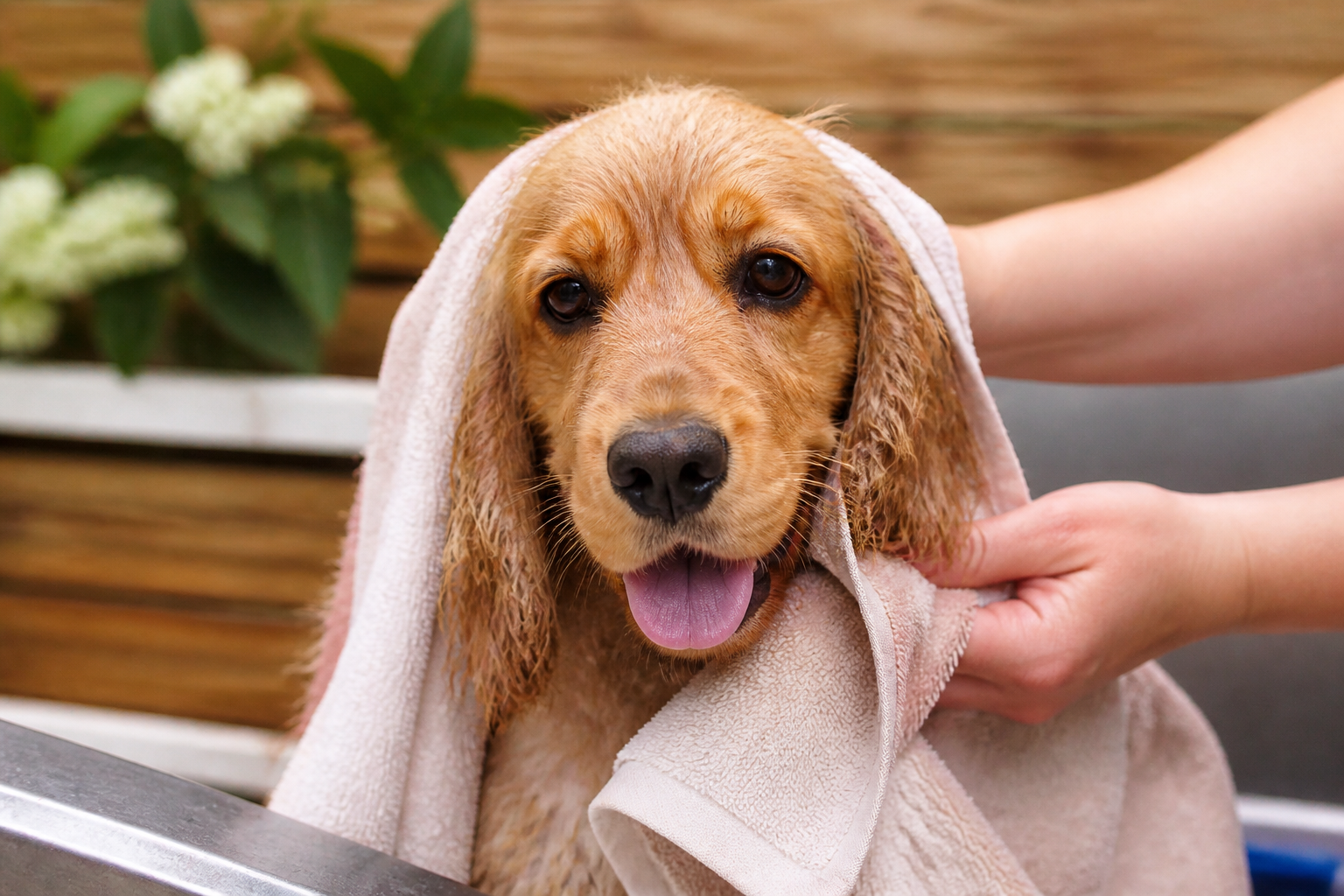
- Dry thoroughly but kindly. Towel-press rather than rough-rubbing the coat. If your dog is comfortable with a dryer, use a cool or low setting, keep it moving and never aim hot air at one patch of skin.
If your dog becomes distressed in the bath, do not turn it into a struggle. A forced experience can make future grooming much harder. A calm mobile groomer may be able to adapt the process, work in shorter stages and use a quieter, one-to-one approach.
Wiping after walks
For some dogs, a quick wipe after outdoor adventures can reduce the amount of pollen, dust, mud and grass residue left on the coat. This may be particularly useful during seasons when your dog’s skin tends to flare, or after walking through long grass.
Use plain lukewarm water on a soft, clean cloth unless your vet has advised a particular product. Concentrate on the feet, lower legs and belly, then dry these areas carefully. Do not scrub sore skin. If your dog has a thick coat, check that dampness is not being trapped between the toes or in skin folds.
Wiping is not a replacement for veterinary treatment, and it will not prevent every allergic reaction. It is simply a gentle hygiene step that may help reduce contact with outdoor irritants.
Keep the coat comfortable between grooms
A sensitive-skinned dog often benefits from a predictable routine rather than a dramatic coat change every few months. The ideal approach depends on coat type, lifestyle, age and how your dog reacts to handling.
- Check the coat daily for grass seeds, burrs, mud and small tangles.
- Inspect under the collar and harness, where rubbing can cause irritation.
- Keep bedding clean and rinse it thoroughly after washing.
- Choose soft, breathable bedding and avoid heavily scented laundry products.
- Wash collars, harnesses and coats regularly according to their care instructions.
- Keep the hair around the feet tidy if it collects mud or dampness, but avoid cutting too close to the skin.
- Make sure your dog is fully dry after swimming, bathing or getting caught in the rain.
- Avoid sprays, perfumes and coat products unless you know they are suitable for your dog.
If your dog frequently becomes damp around the mouth, feet or skin folds, ask your vet or groomer for practical advice. Repeated moisture and licking can contribute to discomfort, but the underlying reason for the licking still needs attention.
Parasite control matters
Fleas and other parasites can cause intense irritation, and some dogs react strongly to even a small number of bites. Regular coat checks are useful, but not seeing fleas does not prove that they are absent. Fleas can be difficult to find, especially in a dense or dark coat.
Use parasite products recommended for your dog by your vet or another suitably qualified veterinary professional, and follow the label or veterinary instructions carefully. Products are not interchangeable, and the correct choice can depend on your dog’s species, weight, age, health and the other animals in the household. Never use a product intended for another species unless your vet has specifically told you to do so.
Ask your vet how bathing, swimming or frequent shampooing may affect the product you use. Keep a note of treatment dates and make sure other pets and the home environment are considered when your vet advises this.
When grooming should wait
It is usually kinder to postpone a non-essential groom and seek veterinary advice if your dog has:
- A new or rapidly worsening rash.
- Open sores, bleeding, swelling or wet, oozing skin.
- A painful area, strong odour or pus-like discharge.
- Sudden hair loss or large bald patches.
- Persistent scratching, chewing or licking.
- Repeated ear infections or very itchy ears.
- Facial swelling, breathing difficulty, vomiting or collapse.
- Suspected fleas, mites, ringworm or another contagious condition.
Contact your vet promptly if your dog is scratching or licking more than usual, appears painful or is damaging their own skin. Seek urgent veterinary help for facial swelling, breathing problems, collapse or other signs of a serious allergic reaction.
Do not apply human creams, essential oils, leftover medication or a medicated shampoo without professional advice. Even a product that helped another dog may be unsuitable for yours. Until you have advice, prevent further licking or scratching as safely as possible and keep the area clean and dry. If your dog is very sore, handle them minimally.
Common coat-care mistakes
Bathing too often
Frequent baths are not automatically better. They may dry the skin or make it harder to identify what is causing a flare-up. Follow a vet-recommended schedule when skin disease is involved.
Scrubbing harder to remove dirt
Vigorous rubbing can irritate the skin and create a negative association with grooming. Gentle soaking, careful massage and thorough rinsing are safer approaches.
Using several new products at once
If you change shampoo, conditioner, laundry detergent and parasite treatment together, it becomes difficult to work out what your dog has reacted to. Introduce changes thoughtfully and discuss them with your vet where skin problems are present.
Brushing through pain
A dog that flinches, turns away, growls or tries to escape may be telling you that something hurts. Stop and assess the coat and skin. Pain can make even a normally gentle dog defensive.
Clipping a severely matted coat at home
Matting can hide fragile skin, sores or parasites. Professional equipment and experience reduce the risk of cutting the skin, but a vet may need to be involved if the matting is painful or associated with skin disease.
A simple sensitive-skin grooming checklist
- Soft brush or coat-appropriate comb.
- Clean towels.
- Non-slip surface.
- Lukewarm water.
- Dog shampoo recommended for your dog, if needed.
- Plain soft cloths for wiping muddy feet or legs.
- Small, high-value treats.
- Good lighting for checking the skin.
- Your vet’s contact details and a note of current treatments.
Keep grooming tools clean and dry between uses. Wash brushes regularly to remove accumulated hair, dirt and product residue, and replace tools that have sharp, damaged or rusty pins.
How one-to-one mobile grooming can help
Some sensitive dogs cope better when grooming takes place in a quiet, familiar setting without a busy salon environment. Howling Dogs Grooming provides calm, patient, one-to-one grooming in a purpose-built van on your driveway, serving Storrington and nearby parts of West Sussex.
Depending on your dog’s needs, a groom may include a full groom, bath and tidy, puppy introduction or teeth-cleaning service. A gentle appointment can be paced around your dog, with careful handling and regular checks of the coat. If your dog has an active skin problem, please tell us before the appointment and follow your vet’s advice about whether grooming should go ahead.
A groomer can help maintain the coat, reduce avoidable tangles and show you suitable brushing techniques. We do not diagnose skin conditions or replace veterinary treatment, but we are always happy to discuss coat-care observations and recommend that you contact your vet when something does not look right.
Frequently asked questions
How often should I brush my dog with sensitive skin?
It depends on the coat. A long, silky or curly coat may need frequent short sessions to prevent tangles, while a short coat may need much less. Brush gently and stop if the skin looks sore or your dog is uncomfortable. Your groomer can demonstrate an appropriate routine.
Can I use baby shampoo on my dog?
It is best to use a shampoo formulated for dogs and chosen with your dog’s needs in mind. If your dog has itchy or inflamed skin, ask your vet which product is suitable rather than experimenting at home.
Should I shave my dog if their skin is itchy?
Not automatically. Clipping may be helpful in some situations, but the right length depends on the coat, skin condition and veterinary advice. Shaving does not treat the cause of itchiness and can expose sensitive skin to further irritation.
Is dry shampoo a good option?
Dry products may freshen the coat cosmetically, but they do not replace proper washing when a dog needs to be cleaned or treated. Ask your vet or groomer before using any product on irritated skin.
Can grooming cure sensitive skin?
No. Grooming can support coat hygiene and comfort, but sensitivity may be linked to allergies, parasites, infection or another medical issue. Your vet is the right person to investigate and manage the cause.
A kinder approach to coat care
The best routine for a sensitive-skinned dog is gentle, consistent and tailored to the individual. Brush little and often, keep the coat free from avoidable tangles, rinse products thoroughly and use only parasite treatments and medicated products as directed by your vet.
Most importantly, do not ignore a dog who is persistently itchy, sore or losing hair. Early veterinary advice can prevent a small problem becoming a much more uncomfortable one. For calm, welfare-first coat maintenance in and around Storrington, contact Howling Dogs Grooming to discuss your dog’s needs and whether a one-to-one mobile grooming appointment would be suitable.