
How to Prevent Fleas Without Overlooking the Basics
Flea prevention is not only about choosing a treatment. Regular checks, correct application, clean bedding, household care and sensible grooming habits all help protect your dog. Here is a practical, welfare-first guide for keeping fleas from becoming a bigger problem.
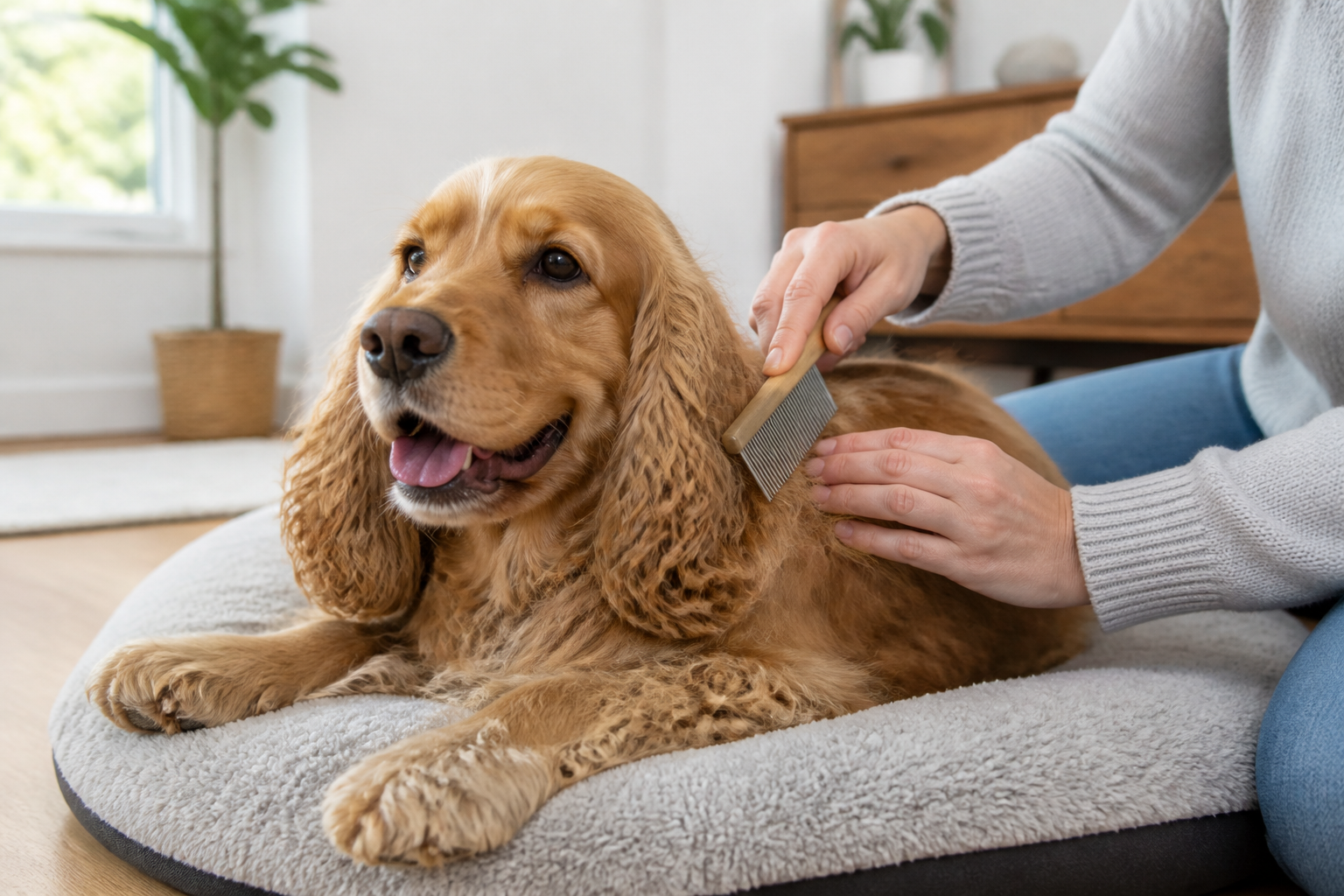
Fleas are easy to overlook until a dog is suddenly scratching, nibbling at their back or developing sore skin. They can be especially frustrating because the adult fleas you see on your dog are only one part of the problem. Eggs and developing flea stages may be present in bedding, carpets, soft furnishings, cars and other places your dog regularly rests.
The good news is that flea prevention does not have to be complicated. The most effective approach is usually a combination of a suitable, licensed parasite product, regular checks and the household basics that are often forgotten. Grooming can help you notice changes early, but it does not replace veterinary advice or a proper flea-control plan.
This guide explains what ordinary dog owners can do at home, what common mistakes to avoid and when it is time to speak to your vet. If you are in or around Storrington, Howling Dogs Grooming is always happy to offer practical grooming guidance alongside your dog’s veterinary care.
Why flea prevention involves more than treating the dog
Fleas can live on dogs, cats and rabbits, but much of their life cycle takes place away from the animal. Eggs may fall into the places where pets sleep and relax, while other developing stages can remain in the home before emerging as adult fleas.
This is why a dog may appear to have fleas again shortly after treatment. New adult fleas can emerge from the environment and jump onto the dog. It does not necessarily mean that the product has been used incorrectly, but it does mean that treating the dog alone may not be enough when an infestation is present.
Fleas are not strictly a warm-weather problem in the UK. Heated homes can provide suitable conditions throughout the year, and dogs can pick up fleas from environments or other animals even when they spend most of their time indoors. A prevention routine should therefore be based on your dog’s lifestyle and your vet’s advice, rather than on the calendar alone.
The everyday flea-prevention basics
1. Use a suitable licensed product as directed
Ask your vet or a suitably qualified person, such as a veterinary pharmacist or SQP, which flea product is appropriate for your dog. The right choice can depend on your dog’s age, weight, health, lifestyle, other pets and the products already being used.
Always follow the product instructions carefully. Check:
- That the product is authorised for dogs.
- That it is suitable for your dog’s current weight and age.
- How often it should be given or applied.
- Whether it should be applied to the skin, given by mouth or used in another way.
- Whether bathing or swimming can affect its performance.
- What to do if a dose is missed.
Do not apply more than the recommended amount or combine products casually. Some flea, tick and worming treatments can be used together, but that should be checked with your vet first. Keep a note of the product name, date and dose so that you do not accidentally repeat treatment too soon.
Licensed veterinary medicines have been assessed for particular animals and uses. Avoid unlabelled products, products bought from unreliable sources or treatments that claim to be natural but do not clearly explain what they contain. Natural does not automatically mean safe for dogs, children, cats or the wider environment.
2. Treat every relevant pet in the household
If one dog has fleas, consider every dog, cat and rabbit in the home. Different species need different products, and a product intended for one species must never be used on another unless a veterinary professional has specifically advised it.
This is particularly important in homes with cats. Some dog flea products contain ingredients that are highly toxic to cats. Never use a dog treatment on a cat, and keep recently treated animals apart if the product instructions say this is necessary.
Speak to your vet before treating a puppy, kitten, elderly pet, pregnant animal, animal with a long-term health condition or any pet that is taking other medicines.
3. Check your dog regularly
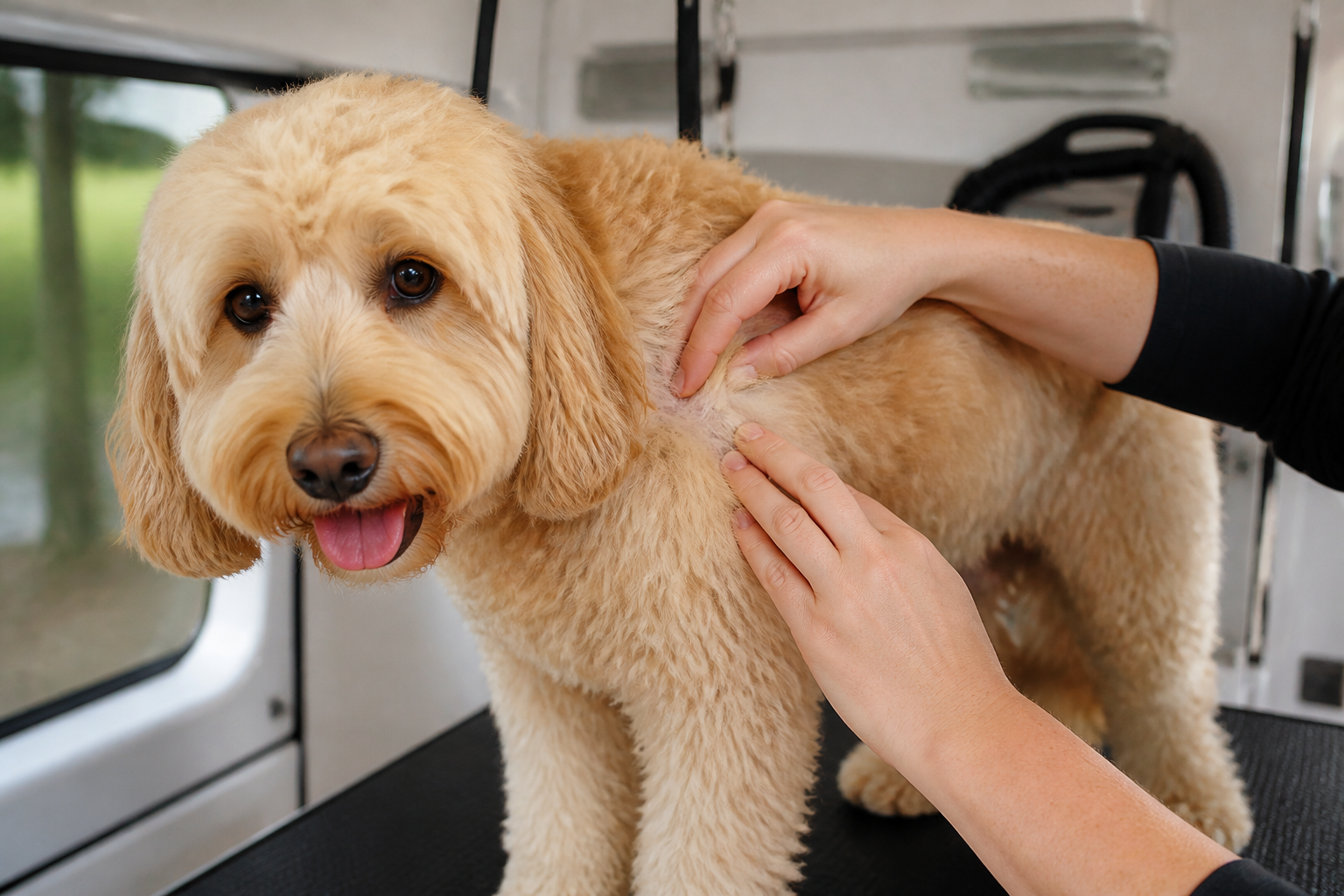
A quick check can be part of your normal grooming routine. Look especially around the lower back, rump, tummy, groin, armpits and the base of the tail. Fleas and flea dirt can be harder to spot in a thick, dark or curly coat, so use your fingers to part the hair gently and inspect the skin rather than only looking at the surface of the coat.
A fine-toothed flea comb can be useful. Comb over a piece of white kitchen roll or paper and place any dark specks onto damp cotton wool. Flea dirt may leave a reddish-brown mark because it contains digested blood. However, not finding fleas does not prove that there are none. Dogs can groom away evidence, and fleas may be present in the home rather than sitting on the dog when you look.
Regular checks are also useful for noticing scabs, redness, hair loss, damp patches, lumps, grass seeds or changes in coat condition. If your dog is persistently itchy, do not assume fleas are the only possible cause.
4. Keep bedding and resting areas clean
Wash dog bedding regularly, following the care instructions for the fabric. Where the material allows, a hot wash can help remove flea stages. Dry bedding thoroughly before your dog uses it again.
Do not forget the less obvious resting places. Check:
- Blankets and throws on sofas.
- Crate mats and travel bedding.
- Car seats, boot liners and travel crates.
- Favourite rugs and the area beneath furniture.
- Dog beds in kitchens, utility rooms, conservatories and sheds.
If your dog moves from room to room, think about the whole pattern of their day rather than cleaning only the bed you see most often.
5. Vacuum the places your dog uses
Regular vacuuming is one of the easy basics that can make a meaningful difference to the household environment. Concentrate on carpets, edges of rooms, beneath furniture, around skirting boards, stairs, upholstery and the areas around beds.
Empty the vacuum cleaner safely and promptly according to the manufacturer’s instructions. If you use a bagged vacuum, seal the bag before disposal. Vacuuming alone may not clear an established infestation, but it is a useful part of an integrated plan.
Remember the car. If your dog travels regularly, clean the places where they sit or lie, including removable mats and blankets.
What grooming can and cannot do
Grooming is helpful because it gives you an opportunity to look closely at the coat and skin. Brushing and combing may reveal flea dirt, live fleas, scabs, areas of thinning hair or irritation that were not obvious during a quick stroke at home.
A bath may remove some adult fleas and debris from the coat, but it is not usually a long-term flea-control solution. It will not deal with eggs and developing stages throughout the home, and some shampoos are not effective enough to prevent reinfestation. Never rely on repeated bathing instead of a suitable parasite plan.
There is another practical reason to keep flea prevention up to date: a dog with an active infestation may have sore, sensitive or inflamed skin. Clipping, brushing or bathing can be uncomfortable when the skin is already irritated. If you suspect your dog has fleas, contact your vet and let your groomer know before an appointment so that the safest and kindest approach can be discussed.
At Howling Dogs Grooming, one-to-one mobile grooming allows time for calm handling and careful observation of your dog’s coat and skin. We can point out grooming concerns and suggest when veterinary advice would be sensible, but we do not diagnose skin disease or replace your vet.
If you find fleas: a sensible step-by-step plan
- Stay calm and avoid applying several products at once. Read the label of anything already used and write down the product, dose and date.
- Contact your vet or a qualified animal-medicine supplier. Ask whether your dog needs a different product, an examination or advice about other pets in the household.
- Check every pet. Dogs, cats and rabbits may all need a species-appropriate plan, even if only one animal is visibly scratching.
- Clean the household. Vacuum regularly, wash bedding and focus on the areas where your pets spend the most time.
- Ask about environmental treatment. An appropriate household flea product may be needed for an established infestation. Follow every safety instruction, including removing pets, children, food and fish where required, and ventilating the area as directed.
- Continue for as long as advised. Flea control can take time because new adult fleas may emerge from protected stages in the environment.
- Arrange veterinary help for skin problems. Sore, infected or very itchy skin may need treatment that a flea product cannot provide.
Do not spray household products directly onto your dog unless the label specifically says that the product is intended for that use. Household flea sprays and pet medicines are not interchangeable.
Common flea-prevention mistakes
Stopping treatment when the weather turns cooler
Fleas can be active inside heated homes during autumn and winter, and an indoor pet may still be exposed. Ask your vet whether year-round prevention is appropriate for your dog.
Treating only the itchy pet
The quiet dog or indoor cat may still carry fleas or contribute to reinfestation. Every animal in the household should be considered as part of the plan.
Guessing the treatment date
It is easy to forget whether a dose was given last week or last month. Use a calendar reminder or written record, and follow the exact interval for that product rather than assuming all treatments work for the same length of time.
Using a flea shampoo as the whole solution
Shampoo may clean the coat and remove some fleas, but it does not usually provide lasting protection or clear the home. It may also affect some topical products if used too close to application.
Relying on essential oils or household remedies
Essential oils, powders and homemade preparations can irritate skin or be unsafe if swallowed or inhaled. Do not put anything on your dog unless it is suitable for dogs and you have followed reliable professional guidance.
Ignoring the dog’s environment
Cleaning only the dog bed may not be enough if your pet sleeps on the sofa, travels in the car or spends time on several floors of the house. Follow your dog’s actual routine.
Assuming every itch is fleas
Fleas are a common cause of itching, but allergies, infection, parasites, grass seeds, dry skin and other conditions can also cause discomfort. Persistent itching deserves proper assessment.
When to contact your vet
Contact your vet if you suspect fleas and are unsure which product to use, how often to treat or whether products can be combined. Veterinary advice is especially important for very young dogs, elderly dogs, dogs with medical conditions and dogs taking regular medication.
Arrange an appointment promptly if your dog has:
- Severe or constant scratching, chewing or rubbing.
- Raw, bleeding, weeping or infected-looking skin.
- Significant hair loss, widespread redness or thickened skin.
- Marked tiredness, weakness or pale-looking gums.
- A large number of fleas, particularly if they are a puppy or a small dog.
- Vomiting, shaking, excessive drooling or unusual behaviour after a flea product.
- Small rice-like segments around the bottom or in faeces, which may indicate tapeworm infection.
If your dog reacts after a treatment, follow the product instructions and contact your vet for advice. Do not apply another medicine to try to cancel out the first one unless a veterinary professional tells you to do so.
A simple flea-prevention checklist
- Ask your vet which flea-control approach suits your dog’s lifestyle.
- Check that every product is licensed and intended for the correct species, age and weight.
- Record each treatment date and follow the label or veterinary instructions.
- Check your dog’s skin and coat during brushing.
- Use a flea comb if you need help inspecting the coat.
- Wash bedding regularly and vacuum favourite resting areas.
- Remember the car, travel crate and other sleeping places.
- Include every dog, cat and rabbit in the household plan.
- Never use a dog flea product on a cat.
- Ask your vet about persistent itching, skin damage or signs of illness.
Frequently asked questions
Can a clean, indoor dog still get fleas?
Yes. Fleas can enter the home on animals, clothing or from the environment, and they can thrive in warm indoor conditions. Indoor living lowers some risks but does not guarantee that fleas will never be introduced.
Can I see fleas in every dog that has them?
No. Fleas can be difficult to spot, especially in a dense or dark coat, and dogs may remove them by grooming. Flea dirt, itching and skin changes can be clues, but a vet should help if you are unsure.
Will regular grooming prevent fleas?
Grooming helps you inspect the coat and notice problems early, but it does not prevent fleas on its own. It should be combined with a suitable parasite-control plan and sensible household cleaning.
Should I bathe my dog after applying a spot-on treatment?
Check the product instructions. Some topical treatments can be affected by bathing or swimming, while others have different requirements. If you are uncertain, ask your vet or the product supplier before bathing.
Do I need to treat my home if I find only one flea?
One flea does not prove that there is a large infestation, but it is a reason to inspect your dog, other pets and the places they use. Ask a veterinary professional whether household treatment is needed, particularly if scratching continues or further fleas are found.
Keeping the basics consistent
Good flea prevention is usually less about finding a perfect one-off solution and more about keeping a sensible routine. Use the right product for your dog, apply or give it correctly, check the coat, wash bedding, vacuum resting areas and involve every pet in the household plan.
If you are worried about your dog’s skin or would like help keeping their coat comfortable and manageable, you are welcome to contact Howling Dogs Grooming in Storrington, West Sussex. Our calm, one-to-one mobile grooming service is designed around your dog’s welfare, while veterinary care remains the right place for diagnosis, medication and parasite-treatment decisions.