
How to Make Nail Trimming Less Frightening for Your Dog
Nail trimming can be unsettling for dogs, especially when they dislike paw handling, the sound of clippers or the feeling of being restrained. The good news is that calm, gradual practice can make nail care much easier. Learn how to build your dog’s confidence step by step, recognise stress signals, choose suitable equipment and know when to ask your vet or a patient groomer for help.
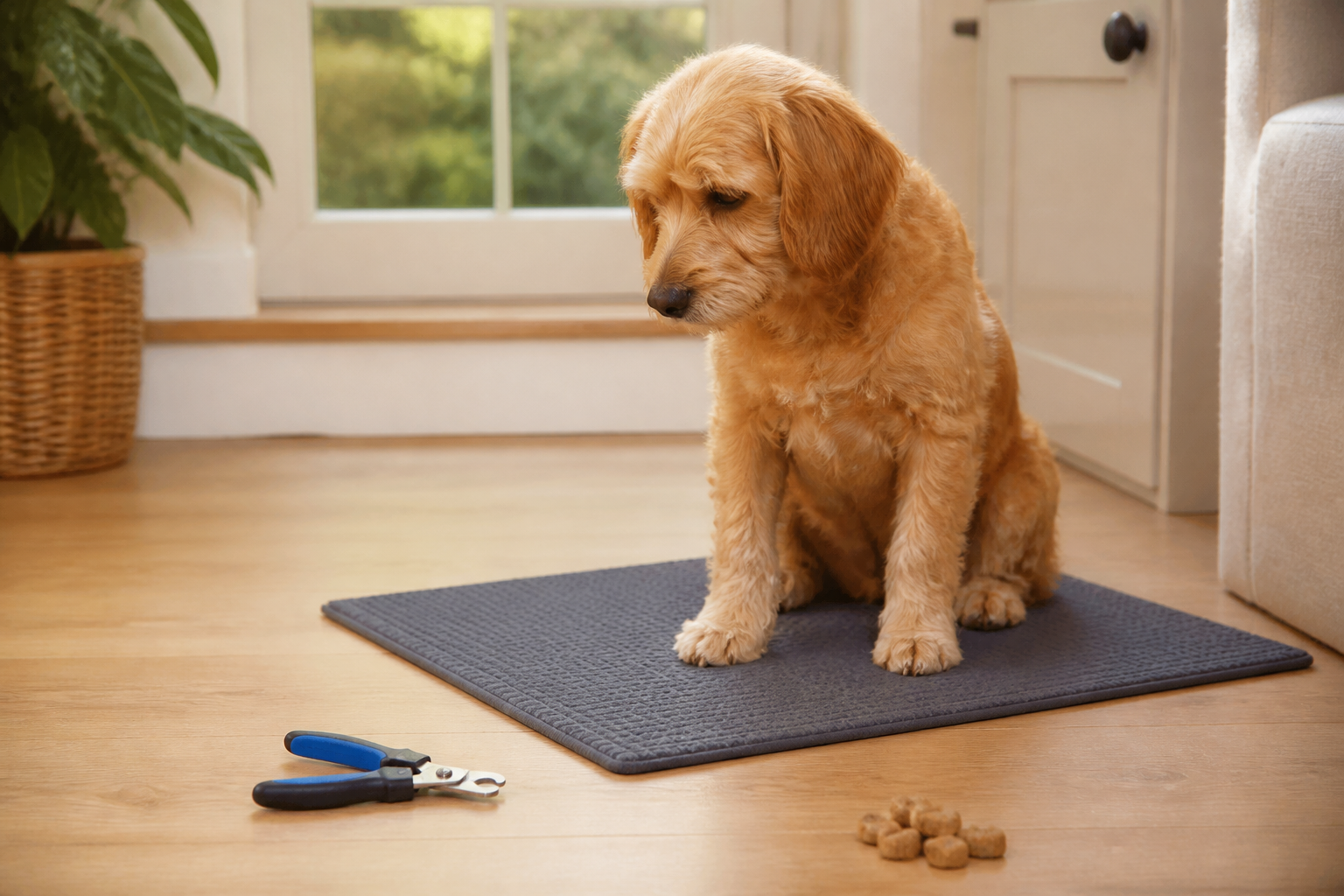
For many dogs, nail trimming is one of the most worrying parts of grooming. A paw may be pulled away, the clippers may look suspicious, or a previous uncomfortable experience may have taught your dog that nail care is something to escape from.
Trying to rush through all four paws can make that worry worse. A calmer approach is to break nail trimming into tiny, manageable steps and reward your dog for staying relaxed. With time, many dogs become comfortable with having their feet handled and their nails cared for.
At Howling Dogs Grooming, we take a patient, one-to-one approach to grooming in our purpose-built mobile salon. However, nail trimming should never be forced, and a dog showing significant fear or pain may need veterinary advice before grooming continues.
Why do dogs find nail trimming frightening?
Dogs can dislike nail care for several different reasons. Some have sensitive paws and do not enjoy having their toes held. Others are worried by the sight or sound of clippers, the vibration of a grinder or the unfamiliar sensation of pressure on the nail.
A dog may also have had a nail cut too short in the past. The sensitive inner part of the nail, known as the quick, contains blood vessels and nerves. If it is cut, the nail can bleed and the experience may be painful. Even one unpleasant incident can make a dog wary the next time clippers appear.
Some dogs become more worried because they are held tightly or chased around the room. Although restraint may seem like the quickest solution, struggling and forced handling can damage trust and make future nail care more difficult.
There may also be an underlying reason your dog is suddenly objecting. Sore paws, a broken nail, arthritis, skin irritation or another painful condition can make foot handling uncomfortable. A sudden change in behaviour should not simply be treated as bad manners.
First, learn to read your dog’s body language
Your dog may communicate that the process is becoming too difficult long before they growl or try to bite. Look for early signs of unease and pause before anxiety escalates.
- Turning the head away or avoiding eye contact.
- Moving away, leaning away or repeatedly withdrawing a paw.
- Yawning, lip-licking or shaking off when they are not wet.
- Flattening the ears, lowering the body or tucking the tail.
- Becoming unusually still, tense or watchful.
- Panting, trembling, drooling, growling, snapping or attempting to escape.
A growl is useful communication, not something to punish. It tells you that your dog is finding the situation too difficult. Stop safely, give your dog space and rethink the next step. Punishing warning signals may teach a dog to stop communicating without removing the fear.
Prepare for calm, confidence-building sessions
Training is easier when the environment is comfortable and predictable. Choose a quiet area where your dog is unlikely to be interrupted. A non-slip mat or rug can help your dog feel secure, particularly if they are being asked to stand.
Have everything ready before you begin so you are not searching for equipment while holding a paw. Use small, tasty treats that your dog enjoys, and keep sessions short. A few seconds of relaxed practice is more valuable than a long session that ends in a struggle.
Useful supplies
- Dog-specific nail clippers in a suitable size.
- An optional dog nail file or grinder, introduced gradually.
- Small, high-value treats.
- A non-slip mat or comfortable surface.
- A torch or good natural light, particularly when examining dark nails.
- A suitable pet styptic product for minor nail bleeding, kept available according to the product instructions.
- A towel or blanket nearby for comfort, but not for wrapping or restraining a frightened dog.
Do not use household scissors or human nail clippers. They are not designed for dog claws and may crush, split or damage the nail. If you are unsure which tool is suitable, ask your vet, veterinary nurse or an experienced groomer for guidance.
Build a positive association with nail care
The aim is not to distract your dog while you surprise them with a trim. Instead, help your dog understand what is happening and allow them to remain comfortable throughout the process. This is often called gradual desensitisation and positive association: the scary part is introduced in very small steps and paired with something pleasant.
Step 1: Reward relaxed behaviour
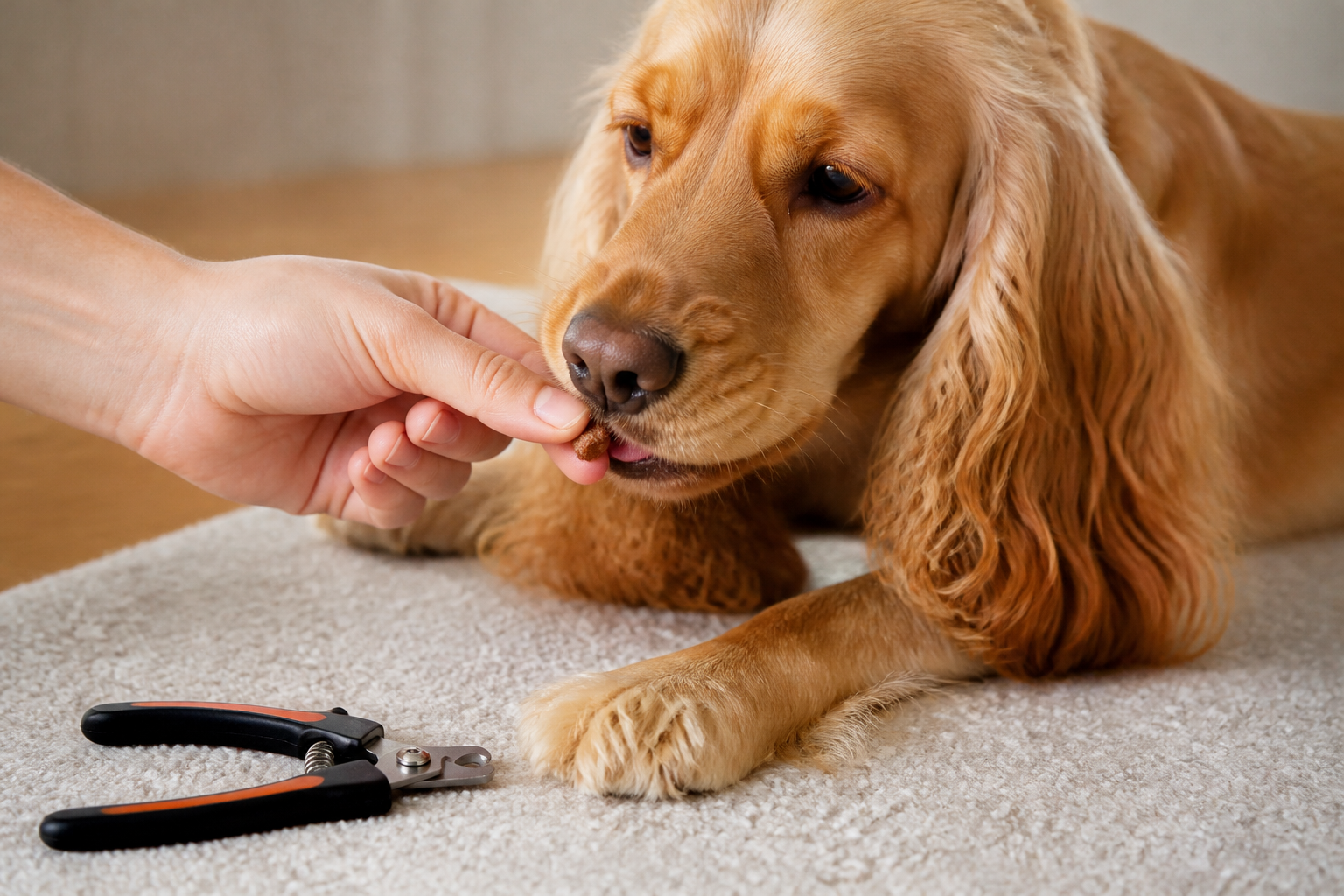
Begin when your dog is calm, perhaps after a gentle walk or at a quiet time of day. Do not start by grabbing a paw. Simply sit nearby, offer a treat and reward your dog for remaining relaxed in your presence.
If your dog is already anxious when you approach, increase the distance and work there. The starting point should be easy enough that your dog can eat, breathe normally and choose to remain with you.
Step 2: Introduce gentle body handling
Touch your dog somewhere they already enjoy being stroked, such as the shoulder or chest. Reward them, then gradually move your hand down the leg. At first, you may only touch the upper leg before offering a treat.
Over several short sessions, work towards touching the lower leg, paw and eventually one toe. Each stage should be repeated until your dog appears relaxed. Do not progress simply because you have completed a certain number of repetitions.
Keep your hand gentle and supportive rather than gripping the paw tightly. If your dog pulls away, let them withdraw and return to an easier stage.
Step 3: Let your dog see the equipment
Place the closed clippers on the floor at a comfortable distance and reward your dog for looking at them. Later, pick them up briefly, offer a treat and put them away. You are teaching your dog that the sight of the equipment does not automatically mean an unpleasant experience.
Gradually bring the clippers closer, but do not move them towards the paw until your dog remains relaxed when they are nearby. If your dog backs away, hides or refuses food, the equipment has been introduced too quickly.
Step 4: Combine paw handling and equipment
When your dog is comfortable with gentle paw handling and the clippers separately, hold the paw in one hand while the closed clippers are present in the other. Reward and release.
Next, touch the clippers to the side or tip of one nail without cutting. Reward immediately. You can then practise opening and closing the clippers away from the dog so they become familiar with the sound.
Only move on to taking a tiny sliver from one nail when your dog remains relaxed through the earlier steps. One nail is enough for a successful first attempt.
Take nail trimming one nail at a time
There is no rule saying that every nail must be trimmed in one sitting. For a nervous dog, one nail followed by a break may be the best possible session. You may need to work over several days or weeks.
- Choose a nail that is easy for you to see and a position that does not make your dog uncomfortable.
- Support the paw gently without squeezing the toes.
- Look carefully at the nail and identify how much can safely be removed.
- Take off only a very small amount, especially if the nail is dark or overgrown.
- Reward your dog immediately and finish while they are still coping well.
Light-coloured nails often allow the pink quick to be seen. Leave a safe margin and do not cut into the pink area. Dark nails are more difficult because the quick cannot be seen clearly. Removing tiny amounts and checking the cut surface frequently can reduce the risk, but if you are unsure, ask your vet or veterinary nurse to demonstrate what is safe.
Remember to check the dewclaws. These nails sit higher on the inside of the leg and may not touch the ground, so they can become long even when the other nails appear reasonably worn.
What about a nail grinder or file?
Some dogs prefer the gradual sensation of a file or grinder, while others find the vibration and noise more frightening than clippers. There is no universally best option; the right choice depends on your dog and how carefully the tool is introduced.
Start by allowing your dog to see and sniff the switched-off tool. Reward calm behaviour. Later, turn it on at a distance for a second or two, then switch it off and reward. Gradually reduce the distance over multiple sessions.
Never press a grinder against the nail for too long, as friction can generate heat and cause discomfort. Keep long hair away from moving parts and follow the manufacturer’s safety instructions. If your dog becomes worried by the sound or vibration, return to an easier stage or use a different method.
Common mistakes that can make fear worse
Trying to complete the whole job in one go
A full trim may be convenient for the owner, but it can be overwhelming for the dog. Stopping after one or two calm nails helps preserve trust.
Holding the dog down
Forced restraint can make a dog feel trapped. It may also increase the risk of injury if the dog struggles. A calm, cooperative position is safer than wrestling.
Using food to trick the dog
Food should help your dog understand that calm participation is worthwhile. It should not be used to lure a dog into a situation where you suddenly grab, restrain or trim without warning. That can make the dog suspicious of future treats and handling.
Ignoring small signs of stress
Waiting until your dog is growling or snapping means you have probably gone too far. Pause at the first signs of tension and make the next session easier.
Cutting more because the nails are still long
Long nails may have a longer quick, so trying to shorten them dramatically in one session can be painful. Gradual trimming is safer. Your vet can advise if nails are severely overgrown or affecting your dog’s feet and movement.
What should you do if the nail bleeds?
If you accidentally catch the quick, remain calm and stop trimming. Apply a suitable pet styptic product according to its instructions, or use the first-aid approach recommended by your vet. Minor bleeding should stop, but contact your veterinary practice if bleeding does not settle, the nail is badly damaged or your dog seems very painful.
After an incident, do not immediately try to finish the remaining nails. Give your dog time to recover and return to gentle handling in future sessions. A single mistake does not mean nail care can never improve, but rushing back in may reinforce the fear.
When should your vet be involved?
Speak to your vet before attempting nail trimming if your dog has painful paws, a torn or split nail, swelling, redness, discharge, persistent licking or a sudden change in tolerance.
Veterinary advice is also important if your dog becomes extremely distressed, trembles, drools, pants heavily, attempts to bite or cannot be handled safely. Some dogs need an individual behaviour plan, and in certain cases a vet may discuss appropriate medication or sedation. Never give your dog a human medicine or a calming product unless your vet has specifically advised it.
If the nails are badly overgrown, curled, embedded or affecting walking, arrange professional help rather than trying to remove a large amount at home. Your vet can assess the paws and advise on the safest plan.
How a calm mobile grooming visit may help
A one-to-one mobile grooming environment can remove some of the pressures associated with a busy salon. Your dog does not need to travel, wait alongside unfamiliar dogs or cope with a noisy stream of people. At Howling Dogs Grooming, we can take time to observe your dog’s body language, work at a suitable pace and discuss what has previously caused concern.
However, grooming is not a substitute for veterinary care or a behaviour referral. If your dog is in pain or reacts with severe fear, the kindest next step may be to speak to your vet first. Good grooming should always be welfare-led, and sometimes that means stopping rather than completing the service.
Frequently asked questions
How often should I trim my dog’s nails?
It varies between dogs. Check the nails regularly rather than relying on a fixed calendar. Nails that touch the ground, visibly curve or make a persistent clicking sound on hard floors may need attention. Walking on pavements may wear some nails, but it does not guarantee that every nail, especially the dewclaws, will stay at a healthy length.
My dog will not let me touch their paws. Where should I begin?
Begin away from the paws. Reward calm handling at the shoulder, then gradually work down the leg over multiple short sessions. If your dog becomes tense, return to the last stage they could manage comfortably.
Should I trim all four paws at once?
No. One nail, one paw or even a short handling practice without trimming can be a successful session. Build duration slowly and finish before your dog feels overwhelmed.
Can I trim my dog’s nails while they are asleep?
It is better not to surprise a dog by handling their feet while they are asleep. They may wake suddenly and feel trapped or startled. Calm, predictable handling while your dog is awake allows them to understand and participate in the process.
What if my dog growls when I pick up the clippers?
Stop and give your dog space. A growl indicates that they are uncomfortable. Do not scold them or continue to test the response. Start again later at an easier level, such as rewarding them for seeing the clippers from a distance, and seek professional advice if the reaction is strong or worsening.
A simple nail-trimming confidence checklist
- Choose a quiet, non-slip area.
- Use dog-specific equipment and have treats ready.
- Practise paw handling separately from trimming.
- Introduce the clippers or grinder gradually.
- Watch for early signs of stress.
- Take off tiny amounts rather than aiming for a dramatic change.
- Reward cooperation immediately.
- Stop after a calm success, even if only one nail was touched.
- Ask your vet for help if there may be pain or the fear is severe.
- Consider patient, one-to-one grooming support if home handling is proving difficult.
Conclusion
The kindest nail-trimming routine is slow, predictable and built around your dog’s consent and comfort. Begin with gentle handling, introduce equipment in small stages and celebrate tiny improvements. Some dogs will progress in days, while others need weeks or months.
If you would like to discuss your dog’s grooming needs or find out whether a calm one-to-one mobile appointment may be suitable, you are welcome to contact Howling Dogs Grooming in Storrington, West Sussex. We are happy to offer grooming guidance, while recommending veterinary advice whenever a health or pain concern is involved.