
Creating a Comfortable Grooming Space at Home
A calm, well-planned grooming space can make brushing, bathing and routine care easier for both you and your dog. Discover how to choose the right location, prepare safe equipment, recognise signs of stress and build positive grooming habits at home, with practical advice from Howling Dogs Grooming in Storrington.
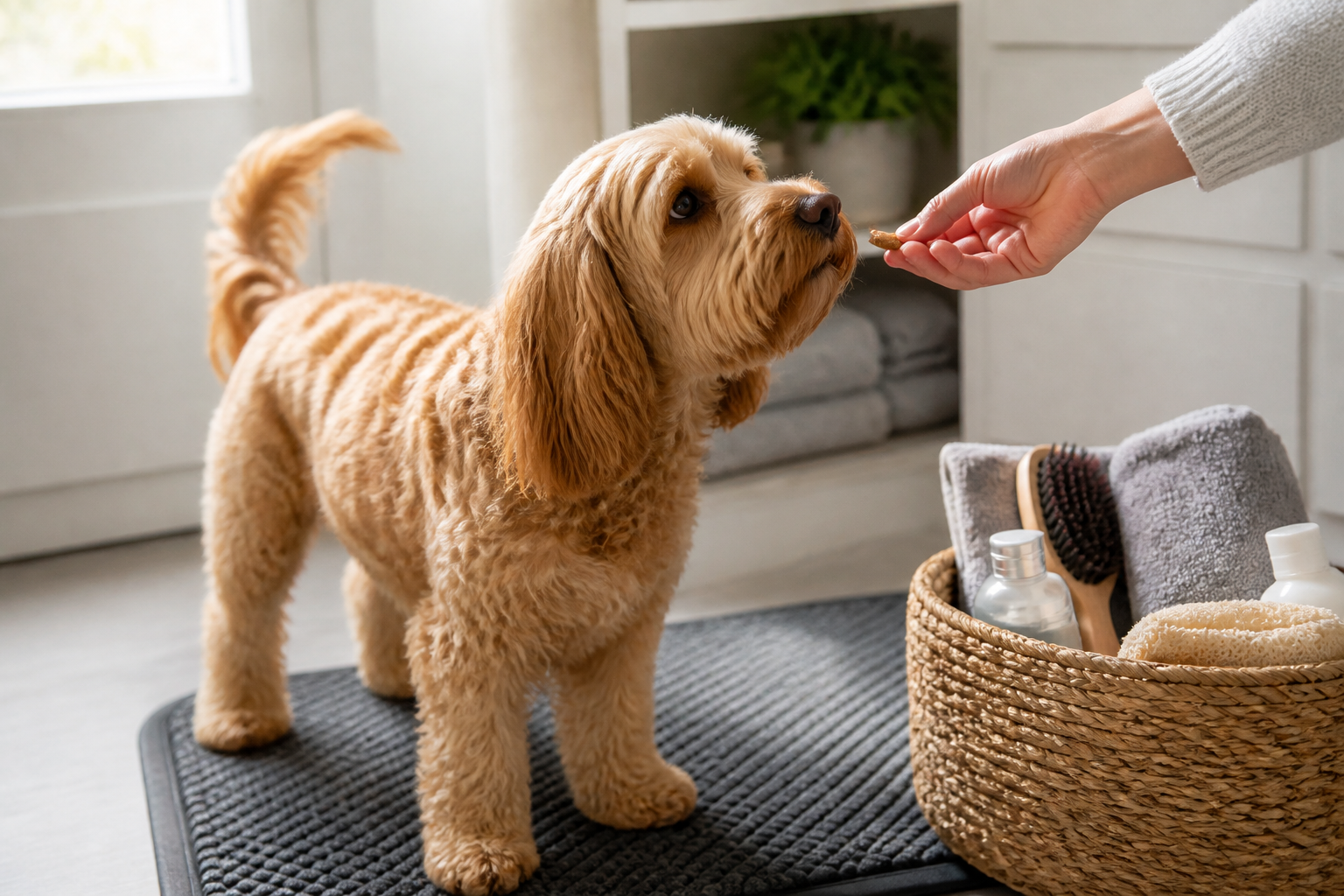
Grooming at home should feel like a calm, manageable part of your dog’s routine rather than a battle that leaves everyone tired. The right space can make a surprising difference. Good lighting, secure flooring, sensible equipment and a quiet atmosphere help your dog feel more settled, while making everyday tasks easier for you.
You do not need a dedicated grooming room or expensive equipment to get started. A carefully prepared corner of the bathroom, utility room, kitchen or another easy-to-clean area may be perfectly suitable for brushing, paw checks, teeth cleaning and occasional bathing. The most important consideration is your dog’s comfort and safety.
This guide explains how to create a welfare-first grooming space at home, how to introduce it gradually and when a professional groomer or vet should be involved. If your dog becomes worried, painful or difficult to handle, stop and seek appropriate advice rather than trying to force the session to continue.
Choose a quiet, practical location
Start by observing where your dog naturally relaxes. A room that is familiar, away from household traffic and free from sudden noises is usually a better choice than a busy hallway or a place where people regularly pass behind your dog.
For many households, a utility room, bathroom or kitchen works well because these areas are easier to clean. However, the room should not feel cold, echoey or frightening. A nervous dog may find the sound of a washing machine, extractor fan or tumble dryer unsettling, so turn noisy appliances off during grooming if possible.
Look for these features
- Non-slip flooring: your dog should be able to stand without their paws sliding. A rubber-backed mat or securely fitted non-slip runner can help, provided it cannot bunch up or become a trip hazard.
- Good ventilation: fresh air is useful, especially after bathing, but avoid draughts and very cold rooms.
- Comfortable temperature: dogs can become chilled when wet, while warm, poorly ventilated rooms can become uncomfortable during drying.
- Easy cleaning: choose an area where loose hair, splashes and muddy water can be dealt with safely.
- Enough space: you should be able to move around your dog without twisting, reaching awkwardly or blocking their escape route.
- Good lighting: clear lighting helps you check the coat, skin, paws and nails without relying on shadows.
- Limited distractions: keep other pets, young children, visitors and exciting toys away while you are working.
Your dog should also have a nearby place where they can settle before and after grooming. The RSPCA advises that dogs need access to a comfortable, clean, quiet resting place and a safe area where they can move away from things that worry them. A grooming space should never become a place where your dog feels trapped.
Make the floor secure and comfortable
Slipping can make grooming frightening, particularly for older dogs, puppies and dogs who already feel uncertain about having their paws handled. It can also make them tense their muscles or try to escape suddenly.
Use a flat, washable, non-slip mat that is large enough for your dog to stand and turn comfortably. Check that it stays firmly in place. A bathmat that slides across a wet floor is not a safe solution.
If your dog is being brushed while standing, place the mat on a solid surface rather than on a raised table, sofa or bed. Home grooming tables are not essential for routine care and can introduce a fall risk if they are not designed, positioned and used correctly. Never leave a dog unattended on a raised surface.
For dogs who find standing difficult, a comfortable floor-level set-up may be kinder. You can sit beside your dog and work in short sections, allowing them to change position when appropriate. If your dog has arthritis, reduced mobility, weakness or a known painful condition, ask your vet for handling advice before attempting more involved grooming.
Prepare your equipment before inviting your dog in
Gather everything you need before beginning. Leaving your dog alone while you search for a towel, brush or shampoo can create unnecessary risk, particularly if they are wet or standing near water.
Useful home grooming supplies
- A suitable brush and comb for your dog’s coat type.
- A non-slip mat.
- Several absorbent towels.
- A dog-specific shampoo, if bathing is genuinely needed.
- A jug or gentle shower attachment for rinsing.
- A small container of treats or a suitable food reward.
- A rubbish bag or container for loose hair.
- Dog nail clippers, if you have been shown how to use them safely.
- A dog toothbrush and dog-safe toothpaste, if teeth cleaning is part of your routine.
- A soft cloth for gently wiping around the face, avoiding the eyes.
- A torch or additional lamp for checking darker coats and paw pads.
Keep scissors, blades, electrical clippers, dryers and grooming products out of reach until you are ready to use them. Store them safely as soon as the session ends. Sharp tools should not be left on the floor or within reach of children or curious dogs.
Use the right products
Choose products made for dogs and suitable for your dog’s coat and skin. Human shampoos may irritate a dog’s skin, and medicated shampoos should only be used when advised by your vet. If your dog has a skin condition, recurring itching, open sores, a strong odour or unusual flaking, speak to your veterinary practice before bathing them.
There is no need to bathe every dog frequently. Bathing too often can remove natural oils from the coat, while some dogs only need a rinse after getting muddy. Your dog’s coat type, lifestyle and veterinary needs all matter. If you are unsure how often to bathe or which brush to use, ask your vet or a reputable professional groomer.
Keep the space calm and predictable
Dogs often cope better when they know what is going to happen next. Use the same area, similar equipment and a familiar sequence where possible. For example, your routine might be: enter the room, have a treat, stand on the mat, brush one small section, take a break and finish with something enjoyable.
Speak gently and keep your movements slow. Avoid looming over your dog, grabbing their collar or suddenly lifting a paw. Move your hand down the leg before touching the paw, as this gives your dog more warning.
Many dogs appreciate a short sniff of safe equipment before it is used. Place the brush on the floor, allow your dog to investigate and reward calm behaviour. Do not push the brush into their face or continue if they move away.
Introduce the space in stages
- Begin without grooming: allow your dog to enter the room, sniff the mat and receive a reward.
- Reward calm standing or sitting: keep the first visit very brief.
- Show one piece of equipment: reward your dog for looking at it or approaching it.
- Add gentle handling: touch a familiar part of the body for a moment, then stop and reward.
- Build gradually: introduce legs, paws, ears, tail and other sensitive areas only when your dog is relaxed.
- Add the brush: touch the coat with the brush, remove it and reward before attempting a stroke.
- Finish while things are going well: short, successful sessions are more useful than one long session.
Dogs Trust recommends gradual, positive handling and advises owners to stop if a dog shows signs of discomfort. This approach is especially helpful for puppies, newly adopted dogs and dogs who have had an unpleasant grooming experience in the past.
Learn to read your dog’s body language
A dog who is coping well may have a loose body, soft eyes, a natural ear position and an ability to take treats or respond normally. They may still move around or need breaks, but they should not look trapped or tense.
Early signs that your dog needs a break
- Turning their head or body away.
- Licking their lips when food is not present.
- Yawning when they are not tired.
- Freezing or becoming unusually still.
- Pulling their ears back or tucking their tail.
- Showing the whites of their eyes.
- Repeatedly trying to move away.
- Shaking, panting or trembling when they are not hot or exercising.
- Whining, barking, growling or attempting to escape.
These signals are communication, not disobedience. If you ignore the quieter signs, your dog may eventually resort to stronger behaviour such as snapping. Stop, create space and consider what caused the worry. A break may be enough, or you may need to return to an easier stage of training at another time.
A sudden change in behaviour during handling can sometimes be linked to pain or another health problem. If your dog has become newly resistant to brushing, paw handling, bathing or being touched in a particular area, arrange a veterinary check rather than assuming they are simply being difficult.
Plan a safe brushing routine
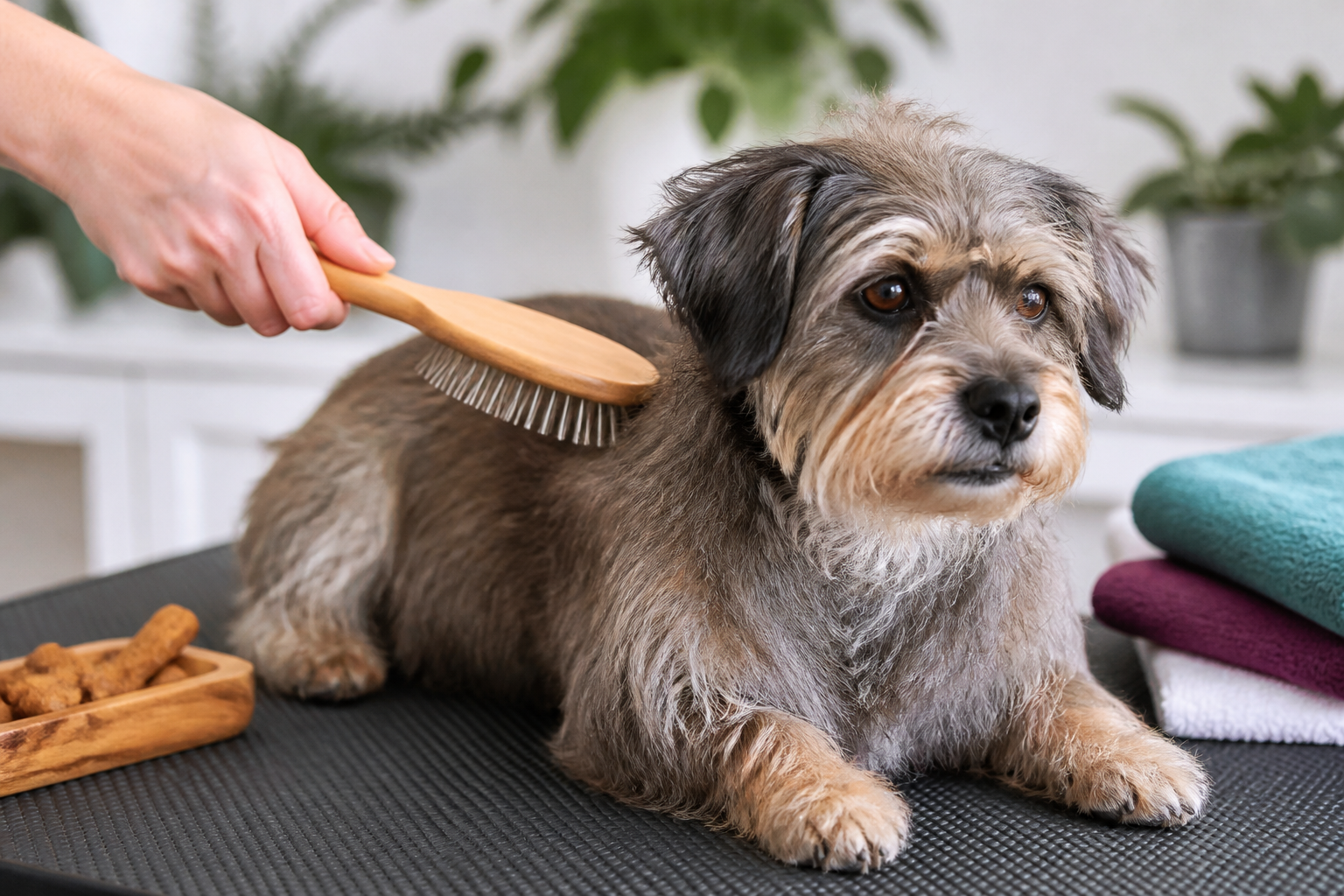
Brushing is often the easiest grooming activity to practise at home, but the brush must suit the coat and be used gently. Ask a professional groomer to demonstrate the correct technique if you are unsure, particularly for long, curly, double or easily matted coats.
- Choose a calm time when your dog is not over-excited, exhausted or desperate to go outside.
- Place the non-slip mat in the prepared area.
- Let your dog settle and reward them for calm behaviour.
- Work on a small section of coat rather than brushing everywhere at once.
- Use light pressure and check the skin as you go.
- Pause regularly and offer a reward or sniff break.
- Stop before your dog becomes overwhelmed.
Do not pull at knots or force a brush through a mat. Matted coats can be painful and may hide sore skin, parasites or other problems. Wetting a tightly matted coat can make the matting more difficult to deal with. If you find significant matting, contact a qualified groomer for advice rather than cutting close to the skin with household scissors.
Make bathing less stressful
Bathing can be enjoyable for some dogs and alarming for others. Prepare the room first: place the mat securely, check the water temperature with your hand and have towels within reach. Keep the water pressure gentle and avoid spraying directly at the face, ears or nose.
Use lukewarm water and a dog-specific shampoo if bathing is appropriate. Rinse thoroughly, because leftover shampoo can irritate the skin. Use a cloth or your hand to clean around the face rather than pouring water over the head.
After rinsing, gently squeeze excess water from the coat and wrap your dog in a towel. Rub lightly rather than scrubbing vigorously. Some dogs find hairdryers frightening, so introduce the sound at a distance on a separate occasion. If you use a dryer, keep it on a low, comfortable setting, keep it moving and never use hot air close to the skin.
Do not leave a wet dog outside in cold weather or allow them to become chilled. Keep the room warm enough for comfort and supervise them until they are dry and settled.
Separate everyday care from advanced grooming
A home grooming space is ideal for gentle brushing, coat checks, wiping muddy paws, routine teeth cleaning and calm handling practice. Nail clipping can also be carried out at home by confident owners who have the correct dog nail clippers and understand how to avoid the sensitive quick.
PDSA advises using dog-specific nail clippers rather than scissors or human nail clippers. If your dog has dark nails, wriggles intensely, becomes distressed or has previously bled from a nail, ask your vet or an experienced groomer to show you what to do. Never continue simply because you have started.
Be cautious with clipping, shaving or cutting around the face, ears, paws and sanitary areas. Household scissors are particularly dangerous because a sudden movement can cause a serious injury. Professional grooming is the safer option when a coat needs shaping, de-matting or a substantial trim.
Keep children and other pets away during grooming
Even a friendly dog may react differently when tired, wet, worried or being handled in a sensitive area. Children should not be responsible for grooming, and they should not approach a dog who is standing on a grooming mat or having their paws, ears or face handled.
Use a door, stair gate or another safe barrier to prevent other pets from entering. A second dog rushing into the room can cause your dog to startle, slip or pull against equipment. It can also make it harder for you to notice early signs of stress.
Common mistakes to avoid
- Trying to complete everything in one session: grooming is not a race. Split tasks over several days if necessary.
- Holding a dog still by force: physical restraint can increase fear and may provoke defensive behaviour.
- Using treats to push through distress: food should support calm learning, not distract you from clear signs that your dog wants space.
- Bathing without checking the coat: mats can tighten when wet and may be painful.
- Using human products: choose dog-specific products and follow veterinary advice for skin problems.
- Ignoring slipping: unstable footing can make a dog frightened and increase injury risk.
- Leaving tools plugged in or unattended: tidy everything away immediately after use.
- Assuming growling is bad behaviour: growling is valuable information that your dog is uncomfortable. Stop and create space.
- Grooming through pain: a painful dog needs veterinary assessment, not more practice.
When to contact your vet
Stop home grooming and contact your veterinary practice if you notice bleeding, a wound, swelling, a painful reaction, persistent itching, a sudden change in behaviour, a strong unexplained smell, discharge, suspected parasites or skin that looks inflamed. Seek urgent veterinary advice if your dog has difficulty breathing, collapses, suffers a significant cut or appears severely distressed.
Never apply a parasite treatment, ear product or medicated shampoo unless it is appropriate for your dog and used exactly as directed. Owners should follow their vet’s advice and use licensed parasite products according to the label. Groomers can help with coat care and can point out concerns, but they do not replace veterinary diagnosis or treatment.
Home grooming space checklist
- Quiet room with minimal distractions.
- Secure, non-slip, washable mat.
- Comfortable temperature and good ventilation.
- Bright, safe lighting.
- Suitable brush and comb for the coat.
- Dog-specific shampoo, if needed.
- Towels ready before bathing begins.
- Treats or rewards available.
- Tools stored safely and electrical equipment unplugged when finished.
- Children and other pets kept separate.
- Breaks planned into the session.
- Vet or professional groomer contacted if the task is beyond your confidence.
Frequently asked questions
Do I need a special grooming table at home?
No. For many routine tasks, a secure floor-level area with a non-slip mat is safer and simpler. If you use a raised table, it must be stable and suitable for dogs, and your dog must never be left unattended on it.
How long should a home grooming session last?
There is no ideal time for every dog. Puppies and nervous dogs may manage only a few seconds at first, while a relaxed adult dog may cope with a longer session. Finish before your dog becomes distressed and build up gradually over time.
What should I do if my dog will not stand on the mat?
Do not drag or force your dog onto it. Leave the mat in a familiar area, reward your dog for looking at it and gradually encourage them to place one paw, then two paws, on the surface. If the mat itself appears frightening, try a different texture or colour.
Can I groom my dog after a long walk?
A gentle walk may help some dogs settle, but avoid grooming when your dog is overheated, exhausted or highly excited. Give them time to cool down, drink and relax first. For bathing, make sure they are comfortable and supervise them carefully while wet.
When should I use a professional groomer?
Contact a professional if your dog is heavily matted, frightened by grooming, difficult to handle safely, has a coat that needs specialist trimming or requires more equipment than you can confidently use. A qualified groomer can also demonstrate suitable brushing and handling techniques for your dog’s coat.
A calmer approach starts with small steps
The best grooming space is not necessarily the biggest or most expensive. It is a place where your dog can keep their footing, understand what is happening and take breaks without being pressured. A predictable routine, suitable equipment and careful attention to body language can turn grooming into a cooperative habit.
If you are based in Storrington, West Sussex, Howling Dogs Grooming offers calm, patient, one-to-one grooming in a purpose-built mobile van on your driveway. Full grooms, bath and tidy services, puppy introductions and teeth cleaning can all be approached with your dog’s welfare in mind. If you would like advice about preparing your dog for grooming or choosing suitable home-care routines, please get in touch. For health concerns, always speak to your vet first.