
What to Pack in a Dog Grooming First-Aid Kit
A well-stocked dog grooming first-aid kit can help you stay calm when a nail bleeds, a paw is grazed or your dog develops a minor irritation. Here is what to pack, what each item is for, what not to use and when to contact your vet immediately.
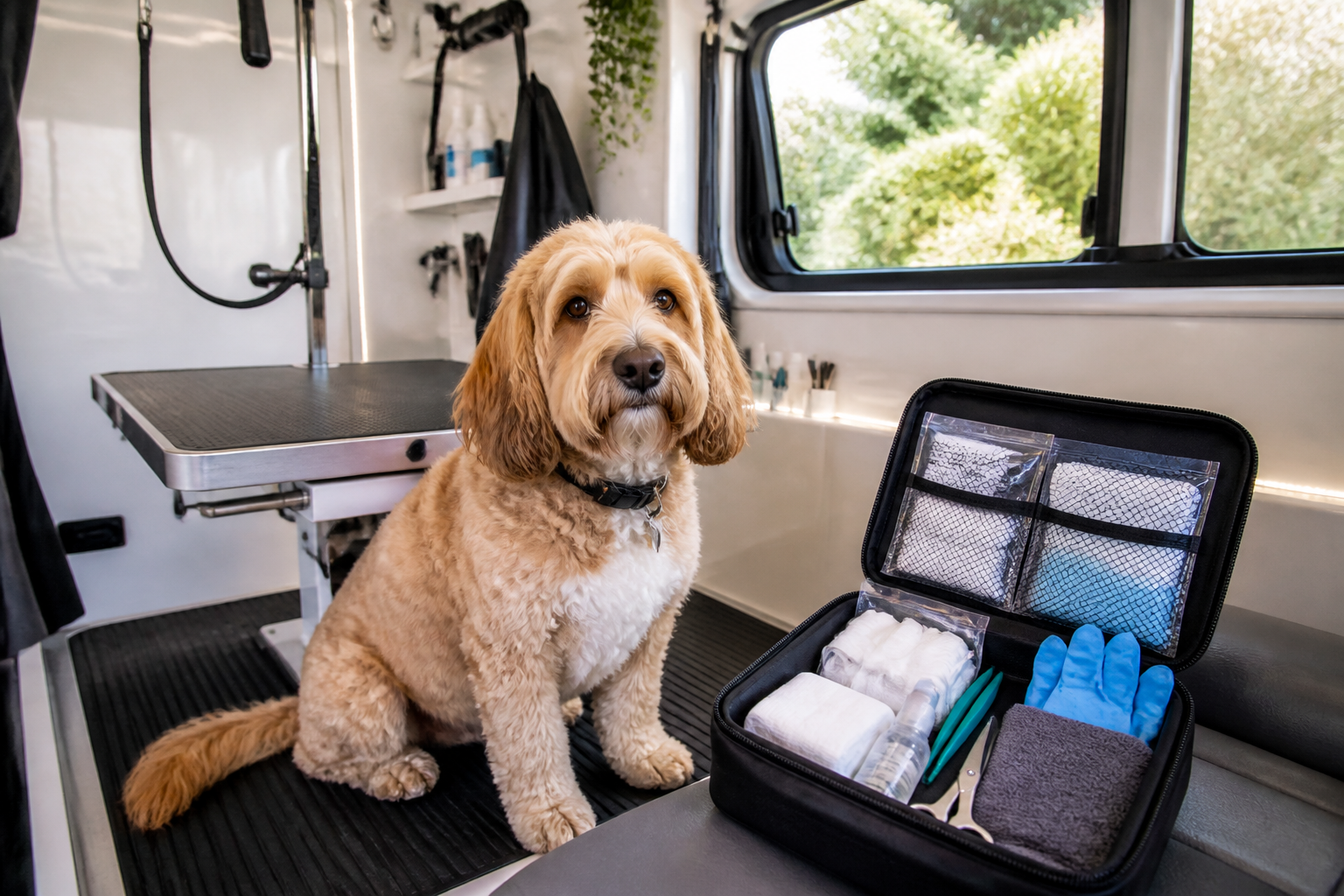
Most grooming sessions are calm, routine and uneventful, but dogs can occasionally suffer a small nick, a bleeding nail, a sore paw or an unexpected reaction to something on their coat. Having a dedicated dog grooming first-aid kit means you can respond calmly while arranging veterinary advice if it is needed.
A first-aid kit is not a substitute for a vet, and it should not contain medicines or products intended to diagnose or treat illness without professional guidance. Its purpose is to help you protect a minor injury, control bleeding temporarily, keep your dog comfortable and travel safely to the veterinary practice if necessary.
This guide explains what to pack for home grooming, travelling and everyday coat care. At Howling Dogs Grooming, our one-to-one mobile grooming service is designed around calm handling and your dog’s welfare, but owners should always contact their vet about significant injuries, pain, skin problems or any worrying change in behaviour.
The essential items for a dog grooming first-aid kit
You do not need a large medical bag. A clean, clearly labelled, waterproof pouch or box kept near your grooming supplies is usually sufficient. If your dog travels regularly, consider keeping a smaller version in the car as well.
1. Sterile wound wash or saline
A sterile saline solution or veterinary wound wash can be useful for gently flushing dirt from a small graze or rinsing the surface around a minor cut. Choose a product intended for wound or eye use and check its expiry date regularly.
For a small, superficial wound, clean lukewarm tap water may also be suitable if that is all you have available. Do not scrub the area, pour cleaning products into a deep wound or use household disinfectants. Unless your vet has advised otherwise, avoid applying creams, antiseptics, essential oils or herbal preparations, as some products can irritate damaged skin or delay healing.
2. Sterile gauze and non-stick dressings
Pack several sterile gauze swabs and non-adhesive absorbent dressings in different sizes. Gauze can be used to dab around a wound or apply gentle pressure. A non-stick dressing is especially helpful because it is less likely to adhere to a bleeding nail, pad or superficial wound.
Keep dressings in their sealed packaging until needed. Once opened, they can become contaminated, particularly in a grooming area where there may be loose hair, shampoo residue or damp towels.
3. Conforming bandage and self-adhesive bandage
A soft, conforming bandage can help hold a dressing in place for the short journey to the vet. A self-adhesive veterinary bandage may also be useful, but it must never be wrapped tightly. Bandages that are too snug can restrict circulation and cause swelling or further injury.
First-aid bandaging is temporary. If a bandage becomes wet, slips, smells unpleasant, becomes tight or the toes swell, contact your vet promptly. Do not leave a makeshift bandage on for longer than necessary without veterinary advice.
4. Blunt-ended scissors
Blunt-ended scissors are useful for cutting dressings, tape or bandage material. Keep them separate from your grooming scissors and use them only when you need to prepare first-aid materials.
Do not cut hair away from a wound if you cannot clearly see the skin, and never pull at fur that is stuck to blood, discharge or a damaged area. Cutting too close can worsen the injury. A vet may need to clip and examine the area safely.
5. Disposable gloves
Several pairs of disposable vinyl or nitrile gloves help protect both you and your dog. Gloves are useful when handling blood, discharge or contaminated material, and they can reduce the risk of introducing dirt into a wound.
Gloves do not replace handwashing. Wash your hands before and after first aid, and clean any reusable equipment according to the manufacturer’s instructions.
6. Clean towels
Keep at least one clean, absorbent towel in the kit. It can help you gently restrain a frightened dog, provide warmth, cover a surface or apply pressure over a dressing in an emergency.
A towel should never be wrapped tightly around your dog’s neck, chest or muzzle. A dog in pain may bite, even if they are normally gentle, so approach slowly and avoid putting your face near theirs.
7. A protective collar or recovery option
An appropriately sized Elizabethan collar, soft recovery collar or veterinary-approved body suit can help prevent licking and chewing after a minor injury. Dogs can quickly turn a small sore into a larger wound by repeatedly licking or scratching it.
Only use a collar that allows your dog to breathe, swallow, drink and move safely. Supervise your dog when introducing it, and ask your vet if you are unsure which option is suitable.
8. Tick remover
A proper tick-removal tool is a sensible addition if your dog spends time in grass, woodland or heathland. Choose a reputable tool and learn how to use it before you need it. Do not burn, crush, smother or cover a tick with oils or chemicals, and do not dig at the skin with a sharp object.
After removing a tick, check the skin and wash your hands. Speak to your vet if the site becomes sore or swollen, if you cannot remove the tick safely or if your dog becomes unwell. Ask your vet about suitable licensed parasite-prevention products for your dog’s age, weight and circumstances, and use them exactly as directed.
9. Fine-tipped tweezers
Fine-tipped tweezers may be useful for picking up small pieces of surface debris, such as a loose thorn that is easy to see and grasp. Do not use tweezers to probe a wound, remove a deeply embedded object or pull at anything near the eye.
If glass, a thorn, a grass seed or another object is firmly embedded, leave it in place and contact your vet. Trying to remove it can cause additional bleeding or push it further into the tissue.
10. A foil blanket
A foil blanket takes up very little room and can help keep a dog warm during transport if they are shocked, wet or feeling unwell. Keep your dog calm and avoid overheating them. A foil blanket should never be used to wrap a dog who may be suffering from heatstroke.
11. A torch and spare lead
A small torch can help you inspect a paw, find a tick or locate a dropped item without using bright lights close to your dog’s face. A spare lead and a well-fitting harness are also worthwhile, particularly if your dog is distressed or their usual collar has become unsafe.
Never use a grooming loop or lead as a substitute for safe veterinary transport. If your dog is weak, collapsed or unable to walk, ask the veterinary team how they would like you to move them.
12. Contact details and a written emergency plan
Keep your vet’s telephone number, address and opening hours in the kit as well as in your phone. Include the details of your nearest out-of-hours emergency practice, because your usual surgery may not be open when an accident happens.
Also write down:
- your dog’s name, age and weight;
- any known allergies, medical conditions or previous reactions;
- current prescribed medicines and the dose instructions;
- your microchip details, if available;
- your insurance information, if relevant; and
- the name and number of a second person who can help.
Add a pen and paper so you can record when an injury happened, what you noticed and any instructions given by the vet.
A practical grooming first-aid checklist
Use this checklist when assembling your kit:
- sterile saline or veterinary wound wash;
- sterile gauze swabs;
- non-adhesive absorbent dressings;
- conforming bandages;
- self-adhesive bandage, used cautiously;
- blunt-ended scissors;
- disposable gloves;
- clean towels;
- an appropriately sized protective collar or recovery aid;
- a tick-removal tool;
- fine-tipped tweezers;
- a foil blanket;
- a torch;
- a spare lead and secure harness;
- your vet’s details and emergency contact information; and
- pen and paper.
You may also wish to keep a bottle of fresh drinking water, spare poo bags and a washable mat nearby. These are not first-aid treatments, but they can make it easier to keep your dog comfortable and your surroundings clean while you contact the vet.
What to do if a nail starts bleeding
Accidentally catching the quick while trimming a nail can produce more blood than many owners expect. Try to remain calm, as your dog will notice if you become alarmed.
- Stop grooming and keep your dog still and supported.
- Place a sterile, non-stick dressing over the nail.
- Apply firm, gentle pressure for several minutes without repeatedly lifting the dressing to check.
- If blood comes through, add another layer rather than pulling the first dressing away.
- Contact your vet for advice, particularly if the bleeding does not settle, the nail is split or your dog is in obvious pain.
Do not use household powders, flour, coffee or random creams on the nail. If your vet has previously recommended a specific product for this situation, follow their instructions rather than relying on general online advice.
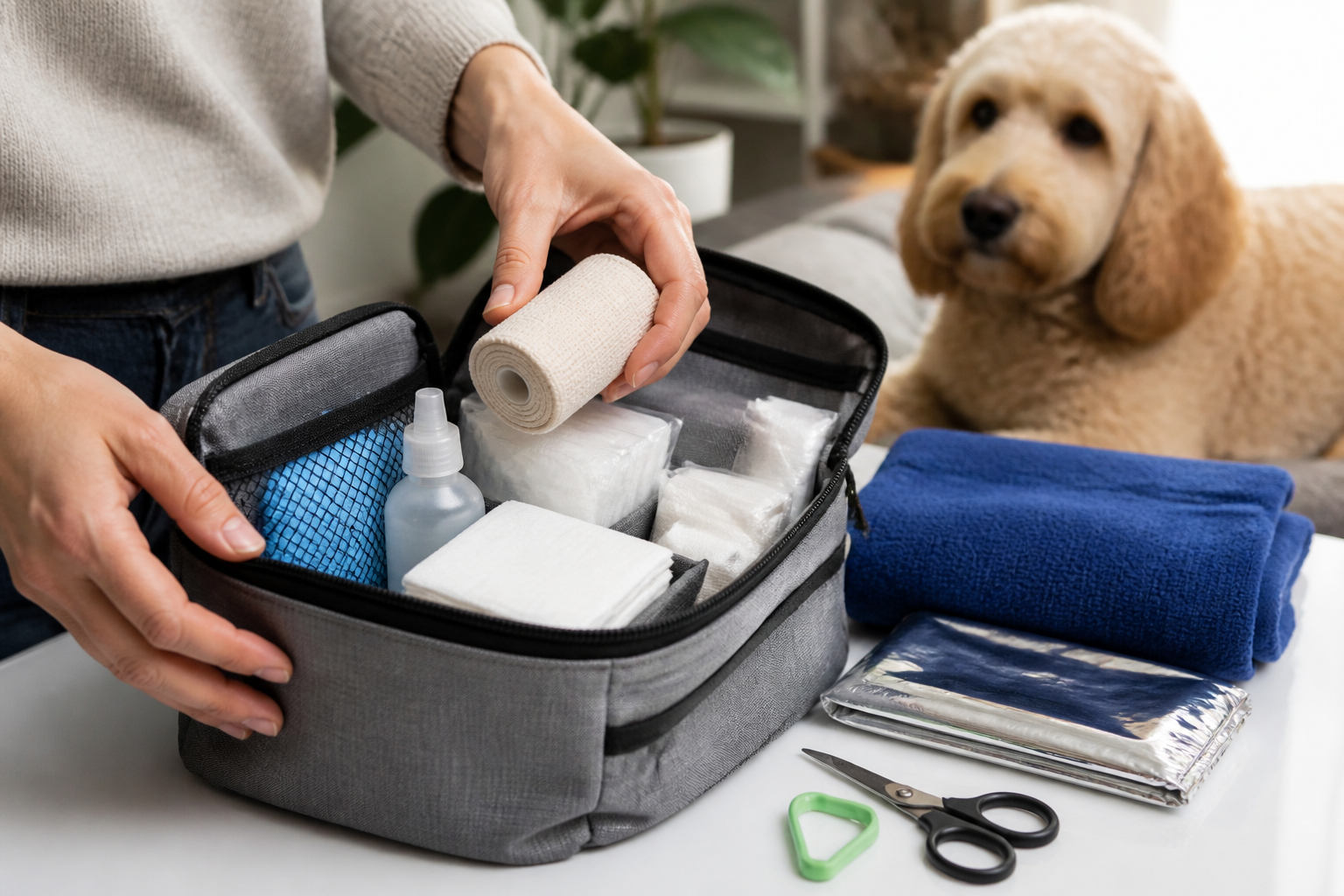
What to do for a minor cut or graze
Only consider simple home first aid when the injury is small, superficial and not bleeding heavily, and your dog is otherwise behaving normally.
- Move your dog to a quiet area and check for other injuries.
- Put on gloves if available.
- Gently rinse away visible dirt with sterile saline or clean lukewarm water.
- Pat the surrounding fur dry without rubbing the wound.
- Prevent licking with a suitable protective collar or recovery garment if necessary.
- Monitor the area closely and contact your vet if it becomes hot, swollen, increasingly red, painful or starts producing discharge.
Do not attempt to stitch, glue or tightly close a wound at home. A small-looking puncture can be deeper than it appears, particularly after a bite or contact with a sharp object.
When grooming should stop and the vet should be called
Stop the grooming session and seek veterinary advice if your dog shows sudden pain, repeated attempts to escape, unusual tiredness, shaking, collapse, breathing difficulty or a marked change in behaviour. These signs may indicate more than a simple grooming-related irritation.
Contact a vet urgently for:
- heavy bleeding or bleeding that does not stop with gentle pressure;
- a deep, large or gaping wound;
- skin that has been torn away;
- an object embedded in the skin, paw or eye;
- an injury involving the eye, mouth, ear canal or genitals;
- a badly damaged, split or partly torn nail;
- significant swelling, severe pain or inability to bear weight;
- pale gums, weakness, collapse or shallow breathing;
- vomiting, facial swelling, hives or breathing difficulty after using a product;
- suspected poisoning or contact with a chemical; or
- signs of overheating, including confusion, collapse, excessive panting or weakness.
If you suspect heatstroke, contact a vet immediately and follow their instructions. Move your dog away from the heat and begin safe cooling advice as directed. Do not delay veterinary care to finish grooming or pack a perfect kit.
What not to pack or use
Human painkillers
Never give your dog human medicines, including common painkillers, unless a vet has specifically prescribed a medicine and explained exactly how to use it. Some human medicines can be highly toxic to dogs.
Strong disinfectants and essential oils
Household disinfectants, fragranced products and essential oils can irritate broken skin and may be harmful if licked. Use only a veterinary product that is appropriate for the situation and follow the label or your vet’s instructions.
Loose cotton wool on an open wound
Loose fibres can stick to blood and damaged tissue. Choose sterile gauze or a non-stick dressing instead. Cotton wool can be useful as padding over a properly placed dressing, but it should not be packed directly into an open wound.
Anything that encourages forced handling
A muzzle should not be added to a general grooming first-aid kit as a default restraint. Some dogs cannot breathe safely through certain muzzle designs, especially if they are distressed or overheated. If your dog may bite because of pain, keep your face and hands away and ask the vet for safe handling advice.
How to prepare before grooming begins
Good preparation prevents many problems. Before brushing, bathing or nail care:
- check that the room or grooming area is warm, well ventilated and free from slipping hazards;
- make sure scissors, clippers and nail tools are clean and in good condition;
- check that shampoos and coat products are suitable for dogs;
- keep products away from your dog’s eyes, mouth and ear canals;
- have towels and your first-aid kit within easy reach;
- use calm, reward-based handling and take breaks;
- stop if your dog becomes frightened, exhausted or painful; and
- never leave a dog unattended near water, heat, grooming equipment or a raised surface.
Regular grooming also gives you an opportunity to notice changes in the skin, coat, paws, ears and nails. However, a new lump, persistent itch, unpleasant smell, recurring redness or sudden sensitivity needs veterinary attention rather than repeated bathing or clipping.
Keeping your kit ready for use
Check the kit every few months and after every use. Replace opened or dirty dressings, expired saline, used gloves and damaged bandages. Wash the storage box and keep everything dry.
It is sensible to store a note on the lid saying: Call the vet first for serious injuries. Do not give human medication. In a stressful moment, a short reminder can help you focus on the next safe step.
How a mobile groomer can help
A calm, one-to-one grooming environment can make it easier to notice when a dog is uncomfortable and pause before a small concern becomes a bigger problem. At Howling Dogs Grooming, we work patiently in a purpose-built van on your driveway, with services including full grooms, bath and tidy appointments, puppy introductions and teeth cleaning.
We can offer practical grooming guidance, such as how to maintain a coat between appointments or which areas to monitor. We do not diagnose skin disease, treat injuries or replace veterinary care. If your dog arrives with a painful, infected, bleeding or unexplained problem, the safest option may be to contact your vet before grooming.
Frequently asked questions
Should I keep a first-aid kit in the grooming room and the car?
Yes, if your dog travels or is groomed away from home. A full kit can stay at home, with a compact duplicate containing dressings, gauze, saline, gloves, a towel, tick remover and emergency contact details in the car.
Can I use my dog’s normal bandage for an injury?
Only as a temporary measure and only if you know how to apply it loosely and safely. A badly fitted bandage can restrict circulation. Call your vet for advice, especially for paw, leg or joint injuries.
Can I bathe a dog with a cut?
Do not assume bathing is helpful. Water, shampoo and rubbing may irritate a wound or spread contamination. For a small superficial graze, gentle rinsing may be appropriate, but deeper, painful or heavily bleeding injuries should be assessed by a vet.
What should I do if my dog licks a grooming product?
Remove access to the product, keep the packaging and contact your vet promptly. Do not make your dog vomit unless a veterinary professional specifically tells you to do so.
Is a first-aid kit needed if my dog is groomed professionally?
It is still useful at home and when travelling. Professional groomers should have suitable safety and first-aid procedures, but accidents and illnesses can happen outside an appointment too. Ask your groomer how they handle emergencies and make sure they know your vet’s details.
A calm kit supports calm decisions
The most valuable things in a dog grooming first-aid kit are simple: clean dressings, saline, bandage materials, towels, protective equipment and reliable contact details. Use them to provide temporary support, not to mask a problem or delay professional help.
Keep the kit accessible, check it regularly and save your vet’s number today. If you would like friendly advice about maintaining your dog’s coat, introducing a puppy to grooming or arranging a calm one-to-one appointment in Storrington and surrounding areas, you are welcome to contact Howling Dogs Grooming.