
What Water Temperature Is Best for a Dog's Bath?
The best water temperature for a dog’s bath is comfortably lukewarm: warm enough to keep them relaxed, but never hot or cold. Learn how to check the temperature, bathe safely, protect sensitive skin and recognise when your dog needs veterinary advice.
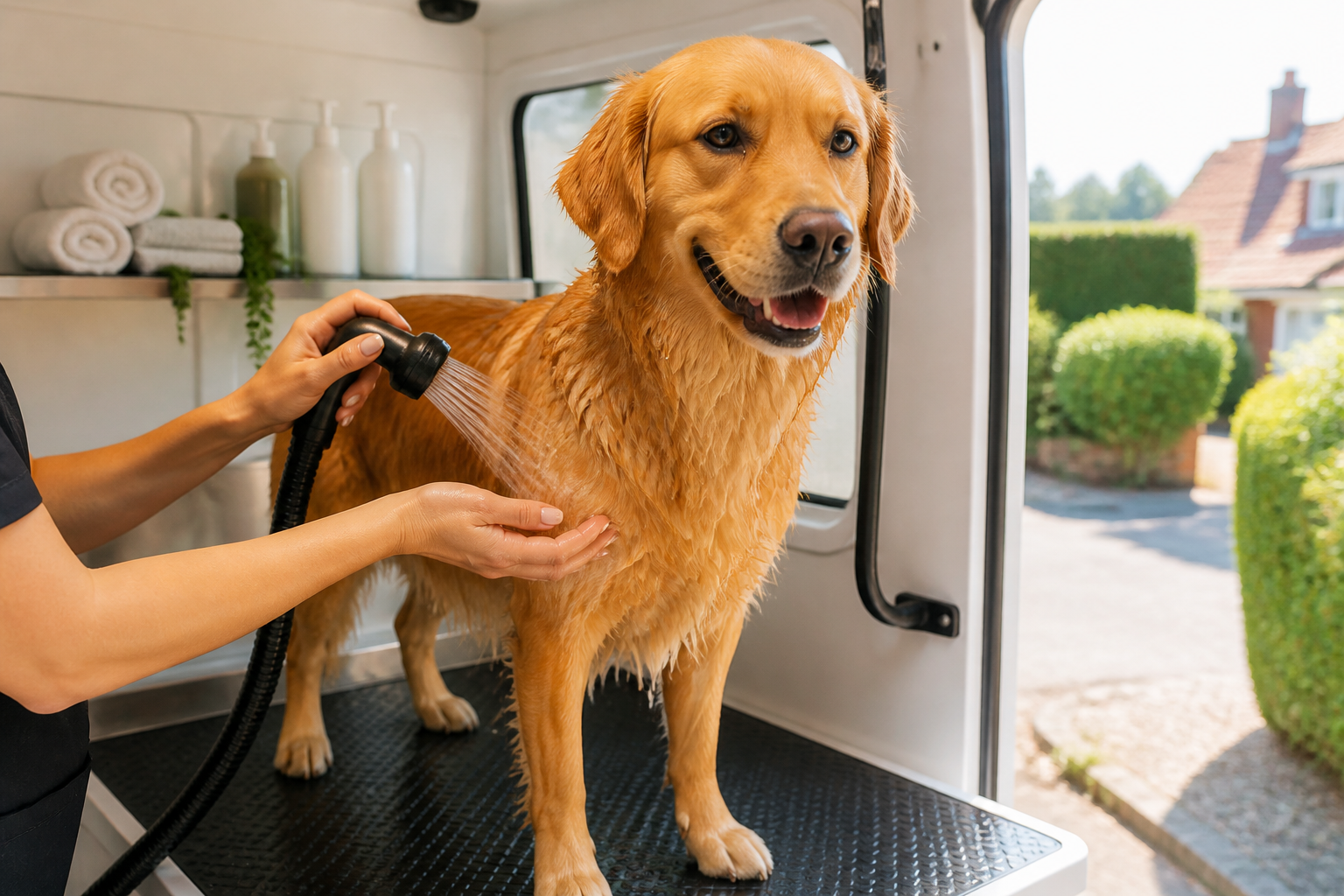
Bath time should be comfortable, calm and uneventful for your dog. One of the simplest ways to make it a more positive experience is to get the water temperature right from the beginning.
For most dogs, the best bath water is comfortably lukewarm—close to a pleasant skin temperature rather than noticeably hot or cold. Water that feels warm and soothing to your hand may feel uncomfortably hot to a dog, while cold water can make some dogs tense, shiver or try to escape.
There is no single temperature that suits every dog. A young puppy, elderly dog, thin-coated breed or dog with health problems may need extra care to stay warm. Dogs with irritated skin may also be more sensitive than usual. The aim is always the same: use gentle, lukewarm water, keep the bath reasonably short and dry your dog thoroughly afterwards.
What temperature should a dog’s bath be?
Use water that feels lukewarm and comfortable on the inside of your wrist or forearm. It should not feel hot, steamy or chilly. If you would describe the water as pleasantly warm rather than hot, you are usually in the right range for an ordinary bath.
It is best to check the water before your dog steps into the bath and then check it again during the wash. Water can change temperature while the tap or shower is running, particularly if somebody uses another tap elsewhere in the house.
For puppies, water close to body temperature is often most comfortable. Puppies can become chilled more easily than adult dogs, so avoid a long bath and make sure the room is warm and the towels are ready before you begin.
Why lukewarm water is the safest choice
Lukewarm water is gentle on the skin and less likely to startle your dog. It helps the shampoo spread through the coat without creating an unpleasant shock and makes it easier to rinse away dirt and product thoroughly.
Very hot water can cause discomfort, worsen already-sensitive skin and, in extreme cases, burn. Cold water may be unpleasant, especially for small, elderly, very lean or short-coated dogs. Even if your dog does not shiver, cold water can make them tense and less willing to cooperate.
A comfortable temperature is only part of a safe bath. A non-slip surface, a calm approach, suitable dog shampoo and careful drying all matter too.
How to check bath water before washing your dog
You do not normally need a thermometer for a routine dog bath. Your hand and your dog’s behaviour are useful guides, although an anxious dog may react to the bath itself rather than the water temperature.
- Prepare the room first. Close draughts, place towels within reach and put a non-slip mat in the bath or shower area.
- Run the water before bringing your dog in. This avoids making them stand around while you adjust the temperature.
- Test the water with your wrist or forearm. The water should feel comfortably warm, never hot or sharply cold.
- Check the spray pressure. A gentle flow is usually less frightening than a powerful jet.
- Introduce water gradually. Start at the shoulders or body rather than spraying the face, head or ears.
- Keep checking as you go. If your dog becomes tense, shivers, pants heavily or tries to leave, pause and reassess the situation.
If you are unsure whether the water feels too warm, turn the temperature down slightly. It is safer for bath water to be mildly lukewarm than overly hot.
Should you use hot water, cold water or warm water?
Hot water
Hot water is not suitable for bathing a dog. A dog’s coat can make it difficult to judge how hot the water is reaching the skin, particularly if the coat is thick or heavily soiled. Hot water may also increase discomfort where the skin is already dry, itchy, inflamed or sore.
Never use hot water to try to “open the pores”, remove a smell quickly or deal with a suspected skin problem. A dog with a skin issue may need a veterinary examination rather than a hotter bath.
Cold water
Cold water is not the best choice for an ordinary bath. Some dogs may tolerate it on a warm day, but that does not mean it is comfortable or appropriate for every dog. Small dogs, puppies, older dogs, dogs with thin coats and dogs that are underweight can lose body heat more quickly.
Cold water can also make bath time more stressful. A dog that feels cold may become restless, shake, brace their legs or try to climb out, increasing the risk of slipping.
Lukewarm water
Lukewarm water is the sensible middle ground for most bathing situations. It should feel neutral to pleasantly warm against your skin, not noticeably hot and not chilly. When combined with a warm room and thorough drying, it helps your dog remain comfortable from start to finish.
Does coat type affect bath water temperature?
The recommended approach remains lukewarm for all coat types, but the bathing process may need to be adjusted.
Thick or double coats
Thick coats can hold a surprising amount of water. Take time to wet the coat right through to the skin, but do not compensate by making the water hotter. Instead, use patience, gentle separation of the coat and a suitable dog shampoo.
Rinsing is particularly important. Shampoo left in a dense coat can cause itching or irritation. Rinse until the water runs clear and the coat no longer feels slippery with product.
Long or silky coats
Long coats can tangle during bathing, especially if they were not brushed beforehand. Brush out loose dirt and small tangles before the bath where this can be done comfortably. Do not pull at tight mats, as they can hide sore skin and may need professional help.
Short or fine coats
Dogs with short or fine coats may feel the temperature change more quickly because there is less insulation between the water and their skin. Keep the bath efficient, avoid draughts and dry them promptly.
Curly or easily matted coats
Curly coats may need careful wetting and thorough rinsing. Avoid vigorous rubbing that creates more tangles. Work gently through the coat and follow the instructions for any professional or veterinary shampoo you have been told to use.
How to give your dog a comfortable bath
Before the water goes on
- Choose a warm, draught-free area.
- Place a non-slip mat or securely fixed towel under your dog’s feet.
- Have dog shampoo, a cup or gentle shower attachment, towels and treats ready.
- Brush the coat first if it is safe and comfortable to do so.
- Remove collars, harnesses and clothing unless your dog needs a secure, safe method of support.
- Check whether a flea or worming product has bathing restrictions and follow the manufacturer’s instructions.
Wetting the coat
Let your dog hear and investigate the water before you begin. Keep your voice calm and use a gentle flow. Start with the body, usually around the shoulders and back, then move gradually towards the legs.
Avoid spraying directly into the face, eyes or ears. Use a damp cloth to clean around the face instead, taking care not to push water into the ear canal.
Shampooing
Use a shampoo made for dogs and follow the product instructions. Human shampoos, washing-up liquid and household cleaners are not suitable choices for routine bathing because they may irritate the skin or strip away protective oils.
Massage gently rather than scrubbing hard. Pay attention to areas that are easily missed, such as behind the ears, under the collar area, between the toes and around the tail, while being careful around any sore or sensitive skin.
Rinsing
Rinse thoroughly with lukewarm water. Product left behind can make the skin itchy and may be licked from the coat later. Take extra care with dense coats, feathering, armpits, groin areas and between the toes.
For a dog that dislikes the shower, pouring water gently from a cup can feel less intense than a spray. Keep the process steady and avoid repeatedly turning the water on and off if the noise makes your dog more anxious.
Drying
Have a towel ready before you finish rinsing. Gently squeeze excess water from the coat rather than rubbing vigorously, particularly if the coat tangles easily.
Keep your dog somewhere warm until they are properly dry. If you use a dryer, introduce it carefully and use a low, comfortable setting. Keep the airflow moving, avoid concentrating heat on one area and stop if your dog becomes frightened or overheated.
Never leave a wet dog outside in cold or windy weather. A damp coat can make them uncomfortable and may allow them to become chilled.
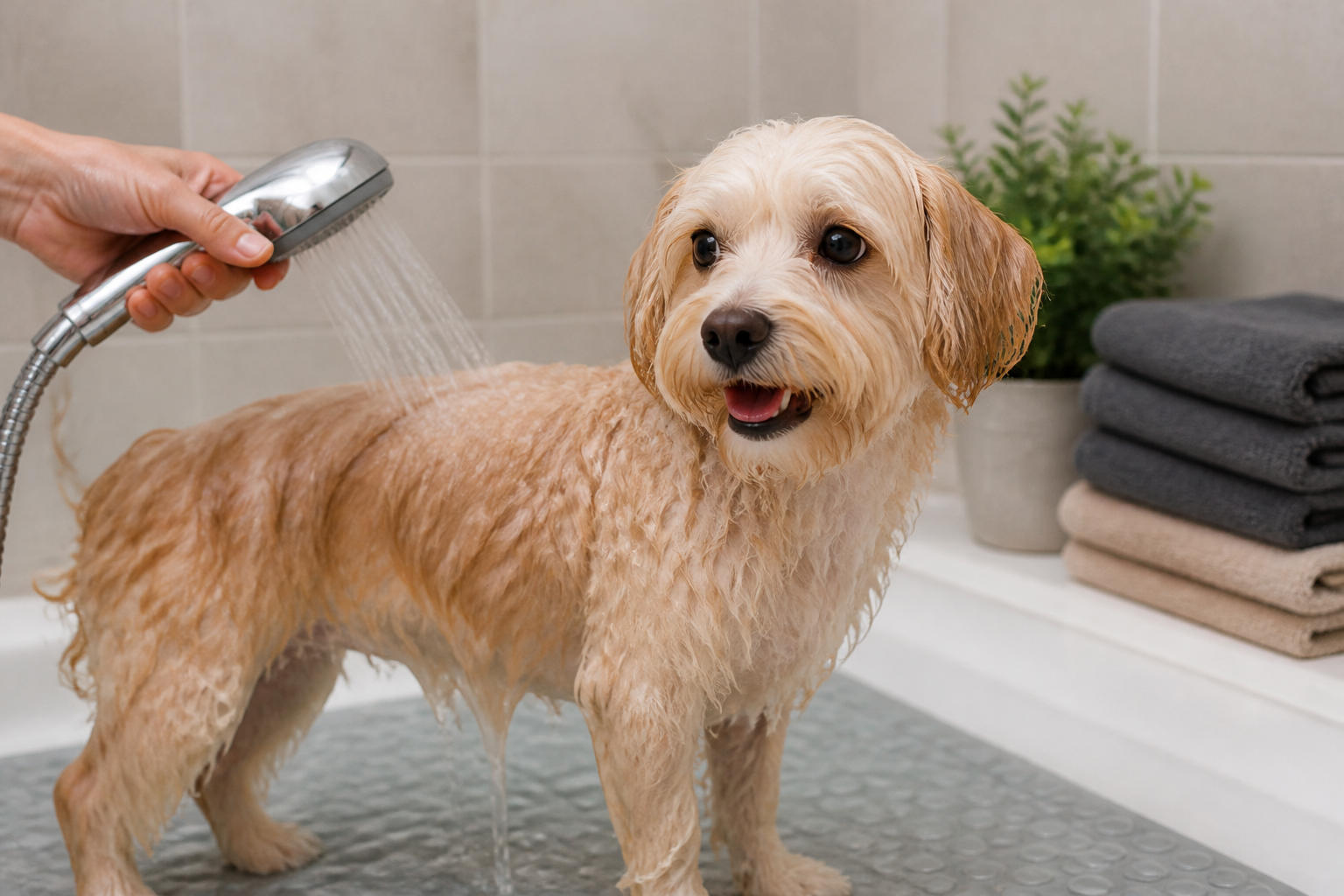
Extra care for puppies, older dogs and sensitive dogs
Puppies
Puppies benefit from gentle, positive introductions rather than being rushed into a full bath. Practise standing on a non-slip surface, hearing the water and feeling a damp cloth before attempting a complete wash.
Use comfortably lukewarm water, keep the session brief and dry your puppy immediately. If your puppy is frightened, pause and return to an easier step another day. Never force a struggling puppy into the water.
Older dogs
Older dogs may have stiff joints, reduced balance, thinner coats or medical conditions that make bathing tiring. Use a stable non-slip surface and support them without lifting in a way that strains your back or their body.
Keep the water lukewarm and avoid long periods standing. If your dog seems unusually tired, painful, confused or distressed, stop and speak to your vet.
Dogs with itchy, sore or inflamed skin
A bath may remove dirt or an irritant, but it does not identify the cause of itching, redness, scabs, hair loss or repeated licking. Use only products recommended or approved for your dog, especially if your vet has prescribed a medicated shampoo.
Follow the veterinary instructions carefully, including how often to bathe, how long to leave the product on and how thoroughly to rinse. Do not add essential oils, household remedies or extra products unless your vet has specifically advised them.
When bathing may not be enough
Contact your vet if your dog has persistent itching, widespread redness, open sores, swelling, a strong unusual odour, recurring ear problems, bald patches, bleeding skin or signs of pain. A dog that is licking or chewing one area repeatedly may also need an examination.
Seek urgent veterinary help if your dog has difficulty breathing, collapses, becomes very weak, has facial swelling, suffers a severe allergic reaction, appears overheated or is not responding normally.
If your dog has rolled in an unknown chemical, paint, oil, solvent or other potentially toxic substance, contact your vet promptly for advice. Do not use hot water or household cleaning products in an attempt to remove it. Follow the instructions given by your veterinary practice or an animal poison service.
Important: A comfortable bath can support good coat care, but it cannot replace veterinary diagnosis or treatment. Always follow your vet’s advice and use licensed parasite products exactly as directed.
Common bath-temperature mistakes
- Using your elbow or hand briefly under the tap and assuming the whole bath is the same temperature. Check carefully and keep checking.
- Making the water hotter because the coat is thick. Use patience and thorough wetting instead.
- Using cold water because the weather is warm. Your dog may still find it uncomfortable, especially during a longer wash.
- Bathing a puppy for too long. Keep early sessions short and positive.
- Spraying the face and ears. Use a damp cloth around the face and protect the ears from direct water.
- Rubbing a matted coat aggressively. This can pull the skin and make tangles worse.
- Leaving the dog damp. Towel-dry thoroughly and keep them warm until the coat is dry.
- Bathing immediately after applying a spot-on treatment. Check the product instructions first, as bathing may affect how some treatments work.
- Assuming shivering is normal. Stop, dry and warm your dog gently. If they remain unwell or chilled, contact your vet.
Dog bath checklist
- Lukewarm water tested on your wrist or forearm
- Non-slip mat or secure towel
- Dog-specific shampoo
- Soft cloth for the face
- Gentle shower attachment or cup
- Several clean towels
- Brush suitable for your dog’s coat
- Warm, draught-free drying area
- Small treats for calm cooperation
- Any vet-prescribed shampoo and instructions
Frequently asked questions
Can I bathe my dog with warm water from the tap?
Yes, provided it is comfortably lukewarm rather than hot. Test it with your wrist or forearm before bringing your dog into the bathing area.
Is cold water ever suitable for a dog?
For routine bathing, lukewarm water is the safer and more comfortable option. Cold water may be unpleasant and can leave some dogs chilled. If your dog is overheated, do not put them into an ice-cold bath. Move them to a cool area, use gradual cooling and contact a vet urgently if heatstroke is suspected.
Can I use water that feels warm to me?
Use your wrist or forearm rather than relying on your palm. If the water feels hot to you, it is too hot for your dog. When in doubt, lower the temperature.
What if my dog shivers after a bath?
Dry them thoroughly, move them to a warm, draught-free place and monitor them closely. If shivering continues, or your dog seems weak, unusually quiet, confused or unwell, contact your vet.
How warm should bath water be for a puppy?
Use comfortably lukewarm water, close to body temperature, and keep the bath short. Puppies can become chilled more quickly than adult dogs, so prepare towels and a warm drying area before you start.
Can grooming professionals help if my dog dislikes baths?
Yes. A patient, one-to-one approach can help dogs who become worried by household baths, slippery surfaces, spray noises or handling. At Howling Dogs Grooming, bathing is carried out calmly in a purpose-built mobile grooming van, with the dog’s comfort and welfare kept central to the session. A groomer can offer coat-care guidance, but veterinary concerns still need to be discussed with your vet.
Keeping bath time calm and comfortable
The best water temperature for a dog’s bath is simple: comfortably lukewarm, never hot and never icy cold. Check the temperature carefully, introduce water gradually, use dog-friendly products and dry your dog thoroughly.
If bath time is becoming stressful, your dog has a difficult coat or you are unsure how to manage a puppy, older dog or nervous dog, contact Howling Dogs Grooming for friendly grooming advice. Calm, patient, one-to-one care can make washing and coat maintenance much easier for both of you, while any medical concern should always remain with your veterinary practice.